Monday, October 18, 2010

Neuvo Andean Extravagance - 1884 Francis Mallmann

Following our final wine tour, we got back to the hotel with some time to spare before we needed to head out for a final dinner in town. And, what with dinner never seeming to start before 9 or 10 pm, there was plenty enough time for a brief wander around the city core and its huge neighbouring park before the sun started to set. In retrospect, with all that time, maybe we could have fit in another winery tour. Not that we needed it.

Ricardo and the wine agency were good enough to set us up with a hard-to-get reservation at 1884 Francis Mallmann - one of the most lauded restaurants in Mendoza and in Argentina. Indeed, although we didn't know this at the time, at one point in 2002, the restaurant had been named as one of the Top 10 Restaurants in the world by a leading magazine poll. We simply knew that its name came up in virtually every conversation we had or article we saw about dining in Mendoza. What we didn't know was that, to get there, it was going to take a 20 minute cab ride through seemingly deserted streets. I have to admit that I thought the cabbie might be taking us for a ride (and still don't know). It turns out, however, that the restaurant is located in an old palatial compound that contemporaneously houses the working winery, Bodegas Escoriheula.

The restaurant and facilities are gorgeous. For the Argentines, the Spring weather was hardly warm, but we figured we needed to take advantage of a cocktail out in the courtyard where we could watch the chefs stoke the wood fire ovens and grills. Francis Mallmann is widely considered one of the premium chefs in the country. He was a culinary star on television for many years and he also has renowned restaurants in Buenos Aries and in Uruguay. He's cooked for presidents and celebrities - and now we've dined on his Neuvo Andean cuisine as well. Boo may not be so pleased to hear that I subsequently read that Mallmann served a dish - that sounded very similar to the rib eye, chimichurri and potato that Boo had - to George W. Bush during an economic summit. Not one of W's biggest fans, had Boo known that tidbit in advance, it might have been enough incentive to order something else.

As one might expect in a restaurant of this supposed calibre, the wine list was enormous - some 600+ Argentine wines were featured. This definitely called for assistance - even after our "extensive" touring of nine wineries. With the sommelier's assistance and suggestion, we chose a wine and producer that I had heard nothing about.

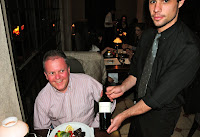
621. 2006 Bodega Bressia Profundo (Mendoza - Argentina)

A number of those wineries we visited were located, like Bodega Bressia, in the Lujan de Cuyo valley, but I have no idea if we travelled anywhere near the winery or not. We were told, however, that the winery is a small family enterprise started by Walter Bressia and his wife and children in 2003. He had previously been involved with a number of the big boys in the Mendocinan wine business for over 30 years and that experience included a stint as winemaker at Vistalba - one of the wineries that Boo and I had insisted on visiting. I'm starting to think that, despite the massive industry in Mendoza, everyone is somehow connected to someone else in the business. It's like seven degrees of wine separation.

The wine we chose is a blend of Malbec, Cab Sauv, Merlot and Syrah (50/30/10/10) and is very limited in production. The winery only makes around 650 some-odd cases of this wine and has a total production of only 2000 cases of its entire portfolio of wines. This bottle was another example of the wonderful Argentine blends that are becoming better known and even available in the BC and Canadian market. I don't think this producer is anywhere to be found in our BC market - yet - but I would readily reach for a bottle of Bressia's wines were I to see one.

I can't help but think of the comparisons between Walter Bressia and Angel Mendoza - the winemaker (and family) behind Domaine St. Diego, our favourite winery from earlier in the day. Well-established winemakers, retirement projects with family involvement and limited production of wines that they are passionate about. If we ran into just two of them in one day, how many more are there out there - and how in the world do you ever find the opportunity to discover them?

None of that philosophizing was part of our dinner though. Rather, it was about fire, grills, beef and chocolate. As much as the ambiance and the wine was delightful, I've got to admit that I don't know if the food lived up to all the hype and to the much higher cost than we were becoming accustomed to. So far on the trip, the reasonable price of food - even good food - was perhaps the most pleasant surprise. This meal was right up there with the cost of a nice restaurant in Vancouver and, as such, was maybe twice to three times the cost of our other meals. The meal didn't exactly leave us thinking that it was two to three times as good as our other meals. I guess sometimes the cost of celebrity is a bit more than the end value.

All the same, it was a grand way to say goodbye to Mendoza. I'd certainly jump at a chance to came back and visit the area again.

Sunday, October 17, 2010

Touring Mendoza - A Final Hurrah

Our third - and final - day of touring came and went all too soon. Our favourite Argentine wine guy, Ricardo, was ready to shepherd us to another three wineries - and again, we weren't necessarily being taken to the best known wineries, but rather we were being shown parts of the wide spectrum that is Argentine wine.

Today's first stop was at Achaval Ferrer. While I recalled having heard of the brand and of seeing a bottle or two on shelves over the years, I knew nothing more about them. The winery is a relatively new entry on the Mendocinan wine scene - having been started up in 1998 by a group of Argentine businessmen and Italian winemakers. From day one, however, Achaval Ferrer started pushing limits and taking out of the mainstream approaches to its winemaking. The winery is all about old vine Malbec, focusing primarily on single vineyard and sub-regional blends, although they also produce a Bordeaux blend called Quimera. If there's one winery in Argentina that tries, more than anyone else, to express terroir - or, perhaps more correctly, terruno - it's likely these guys. They pride themselves on their lack of manipulation when producing their wines - having compared their approach to virtually "throwing grapes in a bottle" and letting the grapes talk for themselves.

Focusing on four vineyards in four different regions of Mendoza province, the winery started out by buying up old vineyards that weren't being used commercially because of their age and lack of production. This was exactly what these folks wanted. Their vineyard yields are about as low as it gets - starting at one ton an acre and maxing out at two and a half tons.

As might be expected from such low yields, total production remains small - maybe 15,000 cases a year. It also results in prices that aren't likely to make Achaval Ferrer an everyday wine in Argentina. In a world of $10 Malbecs, the winery's single vineyard bottles come in at over $100. Accordingly, 85% of their production is exported to the US.

If Boo and I weren't facing the draconian limits of Canadian customs when bringing wine home with us, we could easily have left the winery with a more reasonable number than the one bottle we did. Surprisingly, with all the emphasis on Malbec, our one bottle was actually a Shiraz. To be honest, we didn't even try it; however, when you're told that only 300 cases of a wine are being produced and it's from one of Wine & Spirits magazine's 2009 Wineries of the Year, it only makes sense to seize the opportunity. I'll look forward to adding it to The List in due course.

Our next stop was perhaps our favourite visit of the entire trip. We're talking "hospitality plus" here. Started up in 1988, Domaine St. Diego began pretty much as a retirement project of Angel Mendoza (can there be a more appropriate name for a winemaker in the area?) that has become a family affair. Like Achaval Ferrer, production is limited; however, the atmosphere here is the exact opposite of the high-end, spectacular wineries that we've also seen during our visit.

During our visit at the winery, we were provided with an extensive - and enthusiastic - tour of the vineyard. Our guide clearly loved the opportunity to meet with us and show us as many nooks and crannies of the winery that time allowed. We even met three of five family members now involved with the winery, including Angel Mendoza himself and his wife. When we were told that one of his sons, Lucas, was currently working at a friend's winery in Ontario, we told him that he needs to visit the Okanagan Valley and see what we have offer if he wants to see even more of what Canadian winemaking is like.

The winery is located in a picturesque vineyard with alternating vines and olive trees. It also features one of the few terraced vineyards currently in the region. These terraced vines were the last of the farm to be planted and they consist of the Cab and Merlot varietals that are being more regularly introduced to the area. The terraced area also leads up to a viewpoint that showcases the Christian heritage of the valley. If Domaine St. Diego were located in BC, it would likely be termed a "garage winery" - to the extent that a good portion of the winery's production is still sold to the neighbouring farmers when they bring by their multi-gallon jugs for regular fillings.

Despite the low key approach to the winery, we quickly found out that we shouldn't kid ourselves about the pedigree of the wine. Angel Mendoza worked for 25 years as a winemaker with Trapiche, one of the most prominent wineries in the country. In 2001, he was named Winemaker of the Year by his peers in Mendoza. Furthermore, his wines at Domaine St. Diego continue to win a number of international awards - regardless of the fact that you'll likely never find them outside of Argentina.

All in all, this was one winery tour that I'd have happily seen go on for another hour or two. I definitely let loose a silent "WTF" when I found out that the wines were all priced under $15. Once again, those darned customs limitations curtailed a realistic purchase of what I would have liked to buy. We grabbed a couple of bottles, thinking that we would find the opportunity to quaff them down before heading home. After all, a $15 bottle didn't really fit into the plan for bringing back one or two iconic wines each.

For never having heard of the winery, this was a definite find. We thanked Ricardo profusely for taking us there.

We had one final stop on the day's tour and, like the other two days, it featured a wonderful winery lunch. Ricardo capitalized on his intimate knowledge of the region and took us to Piattelli Vineyards - yet another winery that I knew nothing about. Not surprisingly, we were shown yet another facet of the burgeoning wine scene in Mendoza.

There's no doubt that we wouldn't have stumbled across Piattelli had it not been for Ricardo. While located next door to landmark winery Catena Zapata, Piattelli only started as a project in 2002, with 2004 being the winery's first vintage. The state of the art facility and stunning visitor centre has only been open since November 2009, with the restaurant only opening its doors for lunch about a month ago. The tasting room is more like someone's living room straight out of Architectural Digest. The luncheon clearly hasn't hit the radar of the wine tourism trade yet and we were lucky enough to enjoy the wonderful facilities all to ourselves.

In addition to our sampling of the experimental menu, we were pretty much given free reign over the wine pours. The latter situation likely flowed from Ricardo's obviously good relationship with the winery hostess. As a result, we actually have a bottle to add to The List. There's no doubt we did enough damage to this bottle to have it qualify as a bottle down.

620. 2008 Piattelli Vineyards Grand Reserve Trinita (Mendoza - Argentina)

The winery actually has vineyards in two provinces - one in the northern province of Salta and this location in Luyan de Cuyo in Mendoza. Like most other wineries in the area, Piattelli also features two levels of wines - its Premium and its Grand Reserve. The Trinita is the only blend currently offered by the winery and the 2008 vintage consisted of 65% Malbec, 20% Cab Sauv and 15% Merlot. This was a nice example of how Argentina really is more than just Malbec.

No doubt due to the fact that the primary investor behind the new venture is an American wine importer and wine bar owner in Minnesota, much of the Piattelli production is destined for the American market. It was also interesting to note that this was the only winery that we visited that was looking to capitalize on the trend of reducing its environmental footprint by marketing boxed wine as well. While practically every winery we visited showcased to great extent, and expense, the oak barrels utilized, this was the only time we noticed boxed wine being prepared for shipping as well.

For only having time to visit nine wineries during our Mendoza stay, I think it's safe to say that we had the opportunity to see a good range of the wines being produced and the operations behind them. Boo and I would never have been able to pull this off on our own. We owe a great debt to Ricardo for coordinating our tours and suffering my endless questions and tendencies to dawdle.

I'll be sad to move on from Mendoza after only scratching the surface, but the three days that we had were both informative and immensely enjoyable. There's no doubt that Ricardo will be the first person I'll try to contact should we ever get another opportunity to visit the area! You should too.

Azafran & Pinot

Despite the fact that our day's wine tour included lunch at one of the most celebrated winery restaurants in Argentina - if not the world - we wanted to head out and see what Mendoza had to offer on the food front.

We'd both read and heard great things about Azafran (Spanish for "saffron"), so we figured we'd give it a go. This window into the kitchen wasn't at Azafran. It was at a restaurant that we passed on route, but it certainly gave us the impression that ordering some meat wasn't going to be a problem.

Azafran wasn't quite as forward in its proclamation that "meat rules." On the intimate side - and quaintly appointed with Argentine countryside antiques - it was packed though and we had to wait about 40 minutes to get a table as the restaurant was fully booked when we first arrived. And here I thought no one arrived for dinner before 9 p.m. Luckily they had a great little secondary bar across the street - a glass of bubble and of Torrontes was an easy way to pass the time.

One intriguing aspect of the restaurant was that it didn't have a wine list. Rather, they just escorted you to their wine cellar (that doubles as a wine store) and you could peruse the racks in order to pick that one bottle that you wanted from some 450 labels that were on offer. I guess this is one way to avoid worrying about having to continually update the wine list. I could easily have kept myself occupied for some time there but we'd already ordered our meals and Boo was left alone back at the table.

619. 2007 Rutini Trumpeter Reserve Pinot Noir (Mendoza - Argentina)

Boo jumped right into yet another side of beef, but I decided to try a squid ink risotto since I couldn't recall having ever seen or tried one previously. I also figured that there'd be plenty more opportunities for a little beef. Accordingly, I hoped to straddle both entrees with a lighter red. There weren't a lot of Pinot Noirs to choose from; it's not exactly the most common of grapes in Argentina - particularly in Mendoza. However, the sommelier recommended the Trumpeter. Knowing nothing about the winery, I decided to give it a whirl.

Turns out that Rutini was started and is still operated by yet another long-established family of Italian immigrants. I couldn't find much about the wine as I think the Pinot Noir varietal must be a fairly new product for the winery. I didn't see any reference to or specific notes for a Pinot on their website portfolio of wines; however, I note that it's a recent 2007 vintage. Pinot Noir has never been that notable as a varietal in Mendoza - or in the country as a whole; however, some wineries are starting to look at it as a varietal to be attemped in new areas being opened up.

The wine was 100% Pinot and, according to the website, the winery does have 5 acres of Pinot Noir vines planted in the higher Tupungato region of the province. There was no mistaking this as a Burgundian knock-off though. Finesse or subtlety was hardly a descriptive trait of the wine - perhaps bold, aromatic and fruity are a little more accurate. I actually found it to be so New World in its outlook that it didn't really meet the profile that I'd been looking for. It wasn't a bad wine but it wasn't exactly what I'd term "true to the varietal." True to form though, we had no problem finishing off the bottle.

We did have to head on back to the Wine Floor though to grab a few winks before our next and final day out in the vineyards. Where was the time going?

Catena Zapata and the Wine Floor

With the day's tasting tour over, it was time to check out our new digs in Mendoza city proper. We'd decided on a newer "executive" hotel that featured special wine floors and we were rather hopeful that the added wine attractions would make for a bit of special stay.

The hotel was nicely appointed and well located - right across the street from the Plaza Italia - one of the five main plazas or small parks in the central grid of Mendoza city. We had a bit of time to pass though. One thing we quickly learned about Argentina is that most Mendocinans would never consider going out for dinner before 9 or 10 pm. Rather than sit all alone over dinner, we took a bit of a walking tour of the neighbourhood before heading back to the hotel to capitalize on the wine floor.

Considering it was around 5 p.m. on a Friday night, our little walk was fairly uneventful. The main core of the city seemed fairly compact and was a combination of new and old, renewal projects and classically maintained, seemingly clean and safe - but with armed military quite prominent throughout the place and, particularly, in each of the aforementioned plazas. We didn't quite know what to make of the soldiers/guards. Presumably they might have been there to ensure the safety of tourists, but it did leave us wondering just what was at risk.

There was clearly some confusion over our reservation; however, we were ultimately located on the Catena Zapata floor. Considering our bookings were managed by our agent, I don't know the value difference between staying on one of the wine floors versus the standard floors, but the additional "wine-based" components didn't exactly jump out to us as much on the value-added front. Other than a bottle of entry level wine and a photo of the winery over the bed, I don't know that there was anything of note. I was rather hoping for a tasting lounge on the floor and/or more of a tie in or history of the winery that was the supposed focus of our floor.

618. 2008 Alamos Malbec (Mendoza - Argentina)

Admittedly, I wouldn't have expected a bottle of Catena Zapata's icon wines, but I had thought that there might be more of an opportunity to learn about and/or liaise with the winery than the bottle of Alamos. Not that we didn't open it and manage to finish it off without any difficulty. There was very little information about the winery in the room and what little I now know was found on the internet. If the non-wine floor rooms were similar in layout, I'd say that you wouldn't need the additional flavour and cost of the wine floor.

It seems that most of the thousand or so wineries in Mendoza province have at least two brands that they market under. Catena Zapata was chosen as one of the signature wineries for the five wine floors, but it's not the Alamos that garnered them that "honour." Not too surprisingly, Catena Zapata is yet another winery that revolves around a multi-generational effort from a family that immigrated to Mendoza in the late 1800's from - you guessed it - Italy.

Nicola Catena sailed from Italy in 1898 and planted his first Malbec vines in 1902. I like the story on their website that relates how he "celebrated leaving the famine in Europe for this plentiful land by eating a piece of virtually raw beef for breakfast each morning." Producing fruit for sale and bulk wine throughout the better part of the 20th Century, the difficulties tied up with the 1960's and Argentina's economic and political troubles resulted in American-trained grandson Nicolas Catena taking over the reins of the company and moving the winery more towards the production of a premium, export worthy wine.

Although he apparently didn't have as much faith in the Malbec varietal as his grandfather and father, Nicolas worked towards the identification of those conditions that could produce the best Malbec possible. In 1989, he oversaw the planting of 145 Malbec clones and, after a couple of years, narrowed it down to five clones that he concentrated on in the winery's best vineyards. Those efforts have resulted in consistently well regarded wines.

We didn't actually visit the winery; however, by coincidence, we could see the iconic winery building from one of the neighbouring vineyards that was on our itinerary.

In Argentina, the Alamos Malbec is a 100% varietal that is a blend of grapes from four different vineyards. An Alamos Malbec can be found outside of Argentina; however, it sees the Malbec blended with 5% each of Cab Sauv and Bonarda. It would have been interesting to try the two Malbecs side by side.

In retrospect, there wasn't much about the wine floor that got us excited about Catena Zapata. All the same, I'll keep an eye out for their wines in Vancouver to give them the sort of tasting that would have been nice down there.

Touring Mendoza day 2

So, it's Day 2 of our little Mendocinan Wine Tour and Ricardo was right on time to start another ambitious day. The itinerary du jour was similar to yesterday's - a blend of the specifically requested and the utterly unknown.

We kicked off the morning's tasting at Bodega Sottano - one of the wineries that started completely off the radar for me when I first heard our proposed itinerary. Upon arrival, we, once again, found a family that immigrated from Italy in the late 1800's and has been in the production of grapes and/or wine for generations. The current Sottano endeavour, by the three brothers in the present generation, is quite recent however. The family had a history of selling grapes and producing bulk wine, but that changed at the turn of the new century.

It's that story that has been captured in the marketing of the winery's premium wine, Judas. As mentioned, the family had been producing bulk wine primarily for the Argentine market; however, like any good Italian household, there was wine being for their home consumption. One of the brothers felt that the home brew was too good to just enjoy at a family table. He bottled some of the wine and secretly provided it to prominent wine writers and tradesmen in the area and word started getting out that the Sottano family had a wine that people would want to get their hands on.

This, ultimately, led to the family changing the course of their involvement in the industry and to the formation of the new winery. The resulting legend goes that the family never "forgave" the errant brother for disclosing their hitherto family secret - and they labeled him, and named their premium Malbec, "Judas."

The fruit for Judas is grown on the vineyards located immediately next to the winery in Perdriel, where they have old vine Malbec and more recently planted Cab Sauv. The winery also sources grapes from vineyards a little farther afield in Tupungato in order to offer a more diverse portfolio. When we were taking a look at the Perdriel vineyard, we got a close-up view of the specially designed, heavy duty netting that many of the vineyards use on their premium vines.

Boo and I originally thought that, as in the Okanagan, all the visible netting might relate to protecting the fruit from predation by birds. We found out, however, that the biggest danger to vines and crops here is hail. Mendoza's wine regions may consist of semi-arid desert conditions, without a lot of annual rainfall, but summer storms (like the one we experienced on our first night here) can deliver hail stones the size of golf balls. One storm can so badly damage fruit, leaves and vines that an entire year's crop can be lost. The hail is usually localized though and, as a result, most wineries hedge their bets by operating vineyards in different regions - as is the case with Sottano and their Tupungato plots.

Concentrating on low yields of fruit, production at Sottano is limited. While sampling some big reds in their stunning tasting room, we were told that they currently only have about 16,500 cases to sell a year. Of those bottles, less than a thousand of them are the high end Judas. I wouldn't expect to find their wine at home in Vancouver but I see that they do have an agent here and that wines are available on special order. Hopefully, we'll be able to locate some for a more thorough tasting of their wines.

Our second stop of the day was an interesting addition to the mix of local wineries. Kaiken is another example of the global monies flowing into Mendoza; however, this time, the investment has come from well-known Chilean winery, Montes. The winery is named after the wild geese, "kaikenes," that criss-cross over the Andes between Argentina and Chile and, like those geese, the folk behind Montes have crossed the mountains in an attempt to create wines that reflect the best of both sides of the Andes.

The Argentine venture saw its first vintage in 2002; however, rather than build a brand new, fantastical winery like so many others, the Kaiken owners decided to purchase and renovate an 80 year old building that had previously been home, collectively, to winemaking, olive oil production and the distilling of alcohol and cognac. Although current laws now prevent such mixed production, Kaiken holds on to and offers a bit of a glimpse into Mendocinan history.

When Montes purchased the property, they also inherited some old growth, phylloxera-free vines. It was interesting to see a method of propagation used to allow continue use of those old vines. Where a vine had to be removed, for whatever reason, a branch of a neighbouring plant would be bent over and planted while it was still connected to the mother plant. Eventually, the new branch will take root and start producing vines and fruit of it own.

Touring the historical building was quite a change from all the brand spanking new, architecturally beautiful wineries that we'd been visiting so far. The incorporation of new equipment with the old footprint was something we wouldn't see at home in the Okanagan - where wine production just doesn't date back that far. Kaiken's use of one of the old concrete fermentation tanks to store current wine barrels was an intriguing look at the integration of old and new.

Montes wines are a fairly familiar sight on the wine shelves at home, so we figured that Kaiken would ultimately make its way up to Vancouver as well. Accordingly, we were "good" boys (although maybe not so "good" in the eyes of the folks at Kaiken) and didn't buy any more wine to add to our growing collection. Their premium wines concentrate on Malbec and Cab Sauv and the Malbec we tried was big, rich and full of fruit. I'd definitely grab a bottle if I do see it at home.

Carlos Pulenta Wines was our final destination for the day. This was one of the wineries that I had specifically requested as I had thoroughly enjoyed the wines that the winery served at this year's Vancouver Playhouse Wine Festival. It was rare, at that event, that I'd relished an entire flight of winesl - like I did at their table. The goal of visiting was compounded when I'd read that one of the top winery restaurants in the world and top restaurants overall in Argentina was situated at Carlos Pulenta.

It also seemed like a no-brainer when our travel agent back home advised us that her husband was the local rep for Carlos Pulenta. She was clearly excited when I said that I really wanted to include this winery. I was a tad confused at first in that there are wines from Pulenta Estate (which we visited yesterday) and then there are wines from Carlos Pulenta; however, the latter offers two lines, neither of which involves the name "Pulenta." Perhaps my confusion stemmed a bit from the fact that this Pulenta enterprise is another branch of the family that had sold its interest in Trapiche.

Prior to setting up this new winery from the sale proceeds in 2002, Carlos Pulenta was already a well established name in the Mendocinan wine scene - having been the CEO and President of Salentein (one of the wineries that we visited yesterday).

As mentioned, the Carlos Pulenta winery markets its wines under two lines - the higher end red blends are sold under the Vistalba brand and the fruit driven, fresher varietals under the Tomero line. Vistalba is the name of the immediate area surrounding the winery, but there's perhaps a little more history behind the name "Tomero." A tomero is the man who's job is the distribution of irrigation water to the vineyards that are entitled, by law, to water from the river. These properties will be the ones that were established long ago. All other properties can only use well water. The system uses the waters provided by snow melt in the nearby Andes and distributes them for irrigation by a series of channels. The system has been in place for 200 years and the channels and gates can even be seen on every street in downtown Mendoza.

This was perhaps the quickest of our winery tours - perhaps a bit perfunctory - but we still saw that there had been plenty of money put into the facilities. Production is still limited, however, in that, between the two lines, the winery still only has 20,000 cases available for sale on an annual basis.

Since we were going to be tasting a full flight of wines with our upcoming lunch, we didn't actually sample any wines in the stunning tasting room. I enjoyed the visit there however. The feature wall was simply a cutaway view of the ground and soil to be found in the immediate vineyard. You often hear that "the harder a vine has to work for its nourishment, the better the fruit." It was eye-opening to see just how hard these vines' root system would have to work to establish themselves - looked like rocks, rocks and more rocks to me.

Lunch was to be both similar to - and the opposite of - yesterday's winery lunch at La Tupina. La Bourgogne still features local favourites like sweetbreads and chivito (or kid goat) but executive chef, Jean-Paul Bondoux, is a transplanted Frenchman who's presentation and preparation are as sophisticated as it gets - and delicious I might add. I'm glad to have been able to try both the down-home goodness of La Tupina and the cosmopolitan tastes of La Bourgogne. You can take me back to either restaurant at a moment's notice.

An added pleasure to today's lunch was that our Vancouver travel agent had told the winery that Boo and I would be visiting them and Paula Pulenta, daughter of Carlos, came to have a lovely chat with us. Being the one family member to commit herself to joining the family business full time, I'm sure she had a busy schedule, but she graciously entertained our babble. I'm sure she was likely there longer than expected since the waiters asked if she wanted to take lunch with us. She wasn't able to; however, with any luck, if she ever travels up to Vancouver, she'll take us up on our offer to try and entertain her a little as well.

With another three wineries down and only another 900 some odd to go, it was time to head back into town. Our two nights at the Club Tapiz winery stay had come to an end. So, Ricardo was taking us back to our new home in downtown Mendoza. We were hoping to take in a bit of the city as well during our remaining time - even though it was becoming evident that we were going to be leaving a lot of Mendoza undiscovered. Heavy sigh.

Thursday, October 14, 2010

A Day on the Road in Mendoza

In a way, I'm kind of dreading these next couple of posts. Touring Mendoza has been one of the most highly anticipated portions of our vacation and we're throwing ourselves full bore into the experience. There's just a lot of day to condense into one post.

It took no time to determine that I really knew very little of the Argentina wine scene. Sure there's Malbec and I've even tried Torrontes, but it was abundantly clear that we were barely going to scratch the surface of the Mendoza scene. Perhaps the best bit of trip planning we did was to just leave it up to a travel agent to set all the wheels in motion. I'd advised our agent of a couple of wineries that I specifically wanted to visit because of contact I'd had at this year's Vancouver Playhouse Wine Festival - but, then, I left it up to them to pick interesting wineries that we likely wouldn't see much up here in Vancouver. I wasn't particularly interested in just visiting the big, export driven producers. When I saw the list of nine wineries, I actually questioned some of the picks because I couldn't find much information about them. We were asked to trust them. So we did.

Visiting wineries in Mendoza isn't exactly the same as Napa or our Okanagan Valley where you simply drive around, locate a winery that looks interesting, pop in, try a couple of wines and move on. Most of wineries that receive tourists regularly require reservations and revolve around tours that are followed by a more thorough tasting. Our decision to fit three wineries in a day's itinerary was considered ambitious if nothing else.

Our Day One tour kicked in when we were met at Club Tapiz by Ricardo, a local guide who's background included acting as a translator. Since 2005, however, he's been specializing in eno-tourism. The first stop was to be Pulenta Estate in the Lujan de Cuyo district and Ricardo was a font of knowledge about the region and its wine during our drive to Pulenta. It would turn out that, during our three days with Ricardo, he'd prove to be as patient, responsive and friendly a guide as we could ask for. The fact that he seemed to be on best terms with every person we ran across in any winery was simply a bonus.

I'd wanted to include Pulenta Estate on our itinerary largely because of the wonderful bottle of their Gran Corte VII that we shared at Daveyboi's a couple of months back (#557). It proved to be a good choice. After being greeted with a glass of Sauvignon Blanc (not the first varietal I associate with Argentina), we embarked on what was to become a recurring pattern - a quick tour of the immediate vineyards, followed by a visit to the winery facilities and cellars - where a quick history of winery and its approaches to winemaking were discussed. As similar as the tours were, the stories behind the wineries and the equipment was always different.

The Pulenta family has been active in Argentine viticulture for three generations. The family, like many in Mendoza, immigrated from Italy in the early 1900's and persevered in the growing of grapes and making of wine to the point where, by the end of the century, the family operated and had a majority share in Penaflor, one of Argentina's leading wine consortiums and the producer of one of the country's best-known international brands, Trapiche.

When the family sold its Penaflor holdings, the various branches of the family took different paths to the future. Two brothers, Eduardo and Hugo, started up Pulenta Estate in 2002 and set out to be part of the new, leading edge of Argentine wine - the production of lower yielding vineyards and higher quality wines. Their desire to develop praise worthy wines was clearly evident in the impressive facilities - that included our first exposure to the ubiquitous concrete fermentation containers and to some costly, French oak casks that were being used to experiment with some of the vineyards very best grapes.

Pulenta Estate produces between 40,000 and 50,000 cases annually and markets their range of wines under two labels - Pulenta Estate and La Flor, with the latter featuring younger, more approachable wines. Each of the higher level varietals or blends is identified by a roman numeral - with the Malbec I being the first wine produced by the winery. Accordingly, our much-loved Gran Corte VII was the seventh wine to be offered. We were told of one exception to this marketing program and that's a special bottling of a Cayenne label. The brothers are avid car enthusiasts and Porsche had Pulenta commemorate the launch of the Cayenne in South America with the special bottling. Drop a bundle on a sport utility and get a case of wine thrown in. No drinking and driving though.
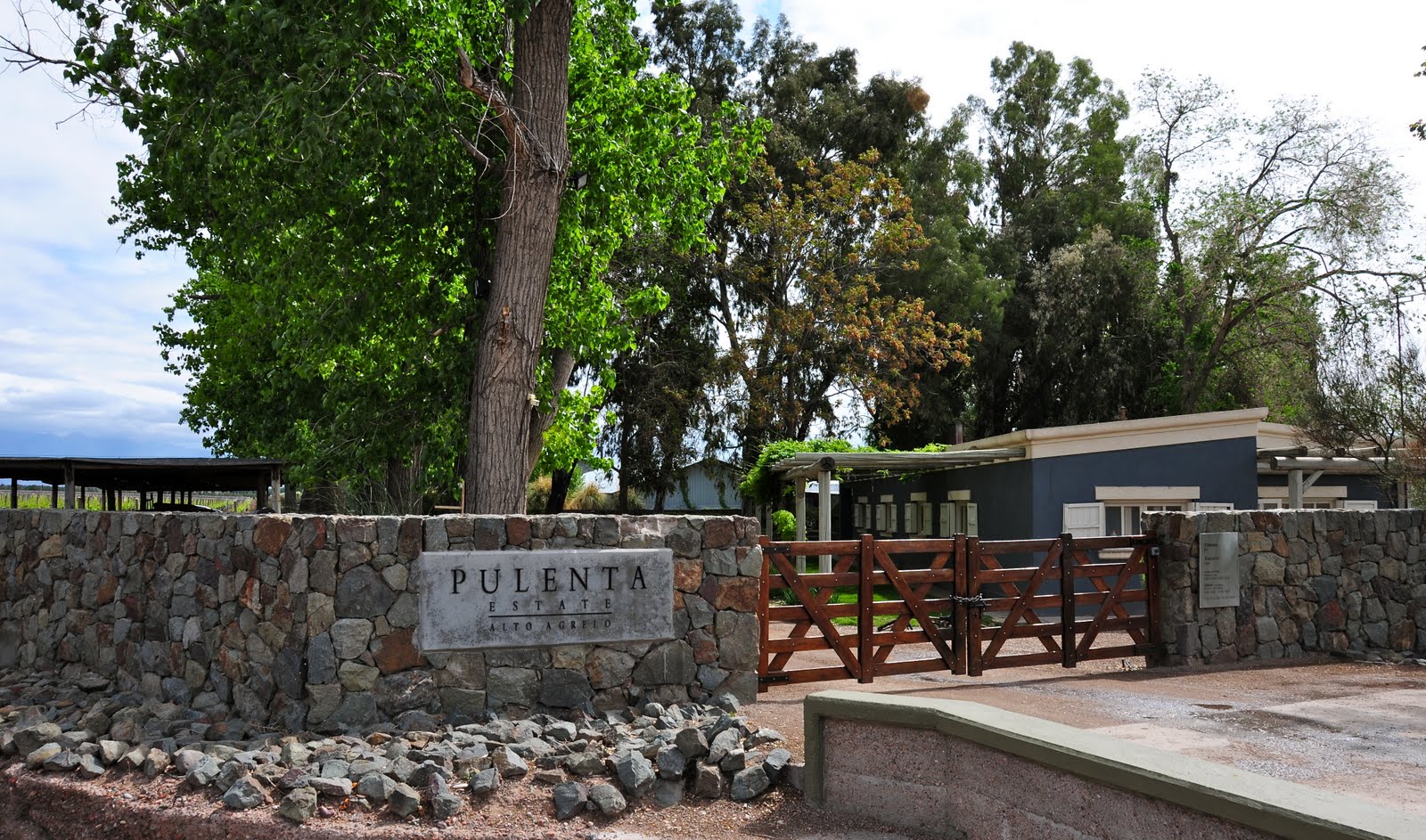
The winery cellar features two barrel rooms that converge in a glassed-in tasting room. With so many of the region's wineries being newly constructed, this was just the first of some incredible settings we'd be tasting in. Luckily, we didn't have to drive at all because we were treated to pours that were substantially larger than are standard at home and we were neither spitting nor leaving much (if anything) behind in the glass. I'm fairly certain that we'd have left with a case of wine had we been back home. The thought of Customs and alcohol duties forced our good behaviour however; we simply grabbed another bottle of the Gran Corte VII and mosied on. And this was just our first stop.

Next up was Bodegas Salentein - a relatively new entrant on the Mendoza wine scene. An example of the foreign investment capital finding its way into Argentine wine, this Dutch based winery is known for its spectacular design. The approximately 1100 acres of vineyards was originally an estancia (ranch) operated by Jesuit missionaries as far back as the 17th Century and, in a tip of the hat to that past, the winery building was designed in the shape of a cross. The four wings of the gravity fed cellar converge in a circular, central chamber that was inspired by ancient, classical temples. Many internet sites refer to Salentein and its "cathedral of wine." Indeed, you can't help but be struck by the impressive structure.

Salentein's production is on a much larger scale than Pulenta. The "temple" has a cellar capacity of 5000 barrels each capable of holding 225 litres of wine. However, like many of Argentina's new breed of wineries, Salentein has a special program - and its own separate mini-winery in the winery - for its Primus line of wines. Like Pulenta, it has a series of temperature controlled French oak fermentation vats - the likes of which I haven't seen in our Okanagan wineries.

It seems that wherever we go, the altitude of the vineyards is one of the most prominent information points that the wineries want to emphasize. It seems that there's serious attitude about altitude in Mendoza. Most of the vineyards in the region are planted at altitudes of 1000 metres (3,2880 feet) or more and, as such, are some of the highest altitudes for wine production in the world. The move to higher altitudes was almost unwittingly started - it became a question of the land around Mendoza city becoming too expensive and the best lands remaining were at higher elevations. One of the benefits was that the farmers and winemakers found that a greater assortment of varietals proved to be well-suited to new microclimates.

Salentein is fortunate in that its vineyards - 80% of which are planted with red varietals - sit at an altitude that ranges from 1,050 to 1,550 metres (about 3,440 to 5,085 feet) above sea level and that range results in a full assortment of microclimates, soils and sunlight orientation. Accordingly, the winemakers have a range of varietals, taste characteristics and profiles to choose from when producing their wines.

The winery also incorporates a cultural centre, called Killka, which houses a collection of contemporary Argentine art and of 19th and 20th Century Dutch artists. Both the interior of the winery and the immediate grounds also feature large sculptures from nationally known artists.

Salentein was one of the wineries that I knew nothing about. Apparently, they participated in this year's Playhouse Wine Festival, but, as was the case with Bodegas Tapiz, I never made it around to their table. Makes me wonder what I was doing there.

Our third and final stop for the day was Bodega Altus. Funny thing about this stop was that we never actually visited the winery. Rather, we were escorted to a small out-building amongst the Cabernet vines to be treated to a lunch that will be long remembered. Restaurants being connected to wineries is becoming a common component of Mendoza's wine tourism and, unbeknownst to us, we were about to experience regional cuisine at its finest.

In my humble opinion, the rustic La Tupina restaurant is a definite must for anyone visiting the area. The chef and creative force behind La Tupina is Lucas Bustos - who we've since found out is heralded as one of the local stars in Mendoza's culinary ranks. Ricardo was clearly on good terms with our chef and, as such, we were given the opportunity to stand around in the Sala del Fuegos (Fire Room) - where the cooking in tupinas or cast iron fire pots takes place - and watch as Chef Bustos worked his magic with an assortment of tapas.

After just a couple of bites of blood sausage, sweetbreads, empanadas and pate, I jokingly asked where his cookbook could be found for sale. Chef turned to Ricardo, chuckled and replied that he actually has one that is currently with the editors and that he hopes that it'll be available in the near future - in both Spanish and English. We NEED this book!

Following an initial nine appetizing tapas and a couple healthy pourings of Altus' Rose, we retired to the main dining room for our actual lunch - another three courses, all matched up with offerings from the winery's portfolio. I can't tell you a darned thing about the winery - except that it's located in the Tupungato region of the Uco Valley. They displayed a full range of wines, but, for our purposes, the winery was completely overshadowed by the lunch and the restaurant.

617. 2009 Bodega Altus Rose (Mendoza - Argentina)

This will also simply have to go down as one bottle that I didn't do my homework on. I can't recall whether Ricardo advised us of the varietal used in this wine at all or not. My guess might be that it was Malbec, but we were so engrossed in the food that I didn't ask to look at the bottle or ask anything about it. It went wonderfully with the tapas and our introductory course of grilled eggplant, prosciutto and tomato sauce though. Once the heavier reds and meat arrived, it didn't really matter.

This was definitely one of the wineries that I'd questioned our Vancouver agent about before we left. Good thing I never overruled them. Guess there's some reason behind trusting the locals and their recommendations.

Our ride home to Club Tapiz may not have been as adventuresome as the truck we passed, but we were definitely as ready for a rest as those passengers were. Day one was done and so were we.