Having successfully shared a little - and literal - taste of the 2015 Wine Bloggers Conference with Boo the other night, I figured "let's just carry on and give it another go." As such, I trotted out another surviving bottle of the bumpy ride home encountered while returning from the Finger Lakes.
1982. 2011 Ventosa Vineyards Lemberger (Seneca Lake AVA - Finger Lakes - New York State)
Now, there might the odd person that would question the urgency or necessity of hustling for a bottle of Lemberger. Indeed, there are likely more folks that would think you're serving stinky cheese rather than wine if you told them that Lemberger was on the menu. But, I'm going to chalk this bottle up to being in the right place at the right time.
As mentioned a couple of posts back, I'd been lucky enough to join up with the WBC15 Pre-Conference Excursion and we were treated to dinner at Ventosa Vineyards by the Seneca Lake Winery Association. The folks at Ventosa were in a particularly celebratory mood that day because they had learned - just that day - that the winery's 2011 Lemberger had won the 2015 Governor's Cup for the Best Overall Wine at the annual New York Wine & Food Classic competition. They referred to it as the Oscars of New York wine and the place was clearly abuzz.
Our little Canadian contingent had taken an immediate liking to Ventosa's free-spirited winemaker, Jenna LaVita, and we joined up with an after-dinner party at Jenna and her partner's side venture, a pub and craft brewery - Lake Drum Brewing. Although her award-winning wine wasn't even for sale at the winery yet, she had a couple of bottles at the pub and she let me twist her arm into selling me a bottle to take home. With only 256 cases of the wine and a major award to shout to the heavens, I'm fairly certain that I wouldn't have ever come across a bottle otherwise.
See what I mean when I say, "right place, right time."
Given the accolade showered upon it as New York State's top bottle, however, the wine wasn't as full or as flavourful as I might have hoped. To be fair, maybe the bottle was suffering some bottle shock from the flight home - after all, it had only been a couple of days - but we didn't catch the "powerful" spice or notes of juniper or eucalyptus on the nose that the winery speaks of. I can see the "under-ripe blackberries" reference but I'm not sure that'd be the hallmark of an award-winning wine for me.
All the same, it was a welcome find and I was thrilled to have a chance to meet with Jenna, to celebrate her big win and to add this bottle to The List. May she experience many more such awards in the vintages to come.
Showing posts with label Wine Bloggers Conference. Show all posts
Thursday, August 20, 2015
Tuesday, August 18, 2015
Bringing the Finger Lakes Home to Vancouver
Despite having to endure an unexpected overnight stay in Chicago - with no excitement to be had following our late arrival at the hotel we were put up in (hence no wine to add to The List from Chicago) - the trip home from the 2015 Wine Bloggers Conference has me back home and looking to reach the heralded 2001st bottle and the "finish line" for this blog.
Although I would have loved to have done so, I wasn't able to bring much wine back with me from WBC15. Indeed, I was dinged for duty at Canadian Customs for the "extra" wine that I did bring back. Turned out I paid duty on a bottle that didn't even make it back to Vancouver in tact. I'd packed a bottle of Fox Run's Hedonia in my luggage - wrapped in a couple of socks - only to find broken shards of glass and some rather wet clothes when I finally opened the bag.
Not that this comes remotely close to being a silver lining, but it was pointed out to me that Hedonia is a dessert wine and that my dirty socks had never smelled so sweet.
Luckily, the other bottles made it home safely and I figured it was only fair to open one of the Finger Lakes wines for Boo since he didn't partake in any of the excitement that was WBC15.
1981. 2014 Hermann J. Wiemer Dry Riesling (Seneca Lake AVA - Finger Lakes - New York)
Among the few things that I remotely knew of the Finger Lakes before departing for WBC15 were that its winemaking history as a region was rather similar to BC's own Okanagan Valley and that it was probably best known for its Rieslings. Being the Riesling fiend that I am, I was particularly looking forward to the chance to sample some of the higher praised Finger Lakes labels.
One night while dining out in Manhattan, Boo and I started chatting with the table next to us as we couldn't help but hear that the majority of their conversation related to wine. It turned out that all three of the diners were involved in the New York wine trade. So, naturally, I wanted to canvas their thoughts on New York Rieslings and ask for a few suggestions. All three of them recommended Hermann Wiemer as one to try. Coincidentally, the proprietor of the bottle shop just around the corner from our hotel made the same suggestion. So, the quest was set.
I never actually saw a wine shop near our Conference hotel but, luckily, I'd noted that Miss Selfie, The Suje and Gone Girl were cavorting amongst the vines on their way up to WBC15. So, I asked them to pick up a bottle of Hermann Wiemer if they happened across one. Naturally, Miss Selfie made it a priority to do just that - and Boo got to be an additional beneficiary.
According to their website, "Hermann J. Wiemer is regarded as one of the pioneers of the wine industry in the Finger Lakes." Coming from a family with 300 years of winemaking experience in Germany's Mosel Valley and relying on his own winemaking and viticultural studies, Mr. Wiemer emigrated to the Finger Lakes in the 1960's, long before anyone thought that the region could support vinifera grape vines. His own experiences led him to believe that the region could realistically grow and ripen Riesling and Chardonnay grapes and that the warming effect of Lake Seneca could help the vines survive the winter chills.
Relying on "German folk wisdom" that "Riesling grapevines would flourish where black cherry trees thrived," Mr. Wiemer purchased 80 acres of land which has since become the HJW Vineyard. His wines have been lauded by magazines and critics and the winery has been named one of the top Riesling producers in the U.S. on numerous occasions.
The winery currently boasts nine Rieslings in its portfolio - ranging from dry through single vineyard to dessert wines like the cherished TBA or Trockenbeerenauslese. Our bottle is the winery's classic, signature wine and, as you might expect, it had a definite Germanic profile.
Both Boo and I thought the praise was well deserved. More nuanced than most New World Rieslings (particularly if you're thinking Clare Valley or New Zealand), the acidity was well balanced with subdued citrus notes and minerality. We were singing Miss Selfie's praises loudly.
I only wish I had more Wiemer wines in order to do a little taste comparison with some of my favourite BC Rieslings. I'll have to see if I can make that happen over the next thousand wines or so. I think it'll be worth the effort.
Although I would have loved to have done so, I wasn't able to bring much wine back with me from WBC15. Indeed, I was dinged for duty at Canadian Customs for the "extra" wine that I did bring back. Turned out I paid duty on a bottle that didn't even make it back to Vancouver in tact. I'd packed a bottle of Fox Run's Hedonia in my luggage - wrapped in a couple of socks - only to find broken shards of glass and some rather wet clothes when I finally opened the bag.
Not that this comes remotely close to being a silver lining, but it was pointed out to me that Hedonia is a dessert wine and that my dirty socks had never smelled so sweet.
Luckily, the other bottles made it home safely and I figured it was only fair to open one of the Finger Lakes wines for Boo since he didn't partake in any of the excitement that was WBC15.
1981. 2014 Hermann J. Wiemer Dry Riesling (Seneca Lake AVA - Finger Lakes - New York)
Among the few things that I remotely knew of the Finger Lakes before departing for WBC15 were that its winemaking history as a region was rather similar to BC's own Okanagan Valley and that it was probably best known for its Rieslings. Being the Riesling fiend that I am, I was particularly looking forward to the chance to sample some of the higher praised Finger Lakes labels.
One night while dining out in Manhattan, Boo and I started chatting with the table next to us as we couldn't help but hear that the majority of their conversation related to wine. It turned out that all three of the diners were involved in the New York wine trade. So, naturally, I wanted to canvas their thoughts on New York Rieslings and ask for a few suggestions. All three of them recommended Hermann Wiemer as one to try. Coincidentally, the proprietor of the bottle shop just around the corner from our hotel made the same suggestion. So, the quest was set.
I never actually saw a wine shop near our Conference hotel but, luckily, I'd noted that Miss Selfie, The Suje and Gone Girl were cavorting amongst the vines on their way up to WBC15. So, I asked them to pick up a bottle of Hermann Wiemer if they happened across one. Naturally, Miss Selfie made it a priority to do just that - and Boo got to be an additional beneficiary.
According to their website, "Hermann J. Wiemer is regarded as one of the pioneers of the wine industry in the Finger Lakes." Coming from a family with 300 years of winemaking experience in Germany's Mosel Valley and relying on his own winemaking and viticultural studies, Mr. Wiemer emigrated to the Finger Lakes in the 1960's, long before anyone thought that the region could support vinifera grape vines. His own experiences led him to believe that the region could realistically grow and ripen Riesling and Chardonnay grapes and that the warming effect of Lake Seneca could help the vines survive the winter chills.
Relying on "German folk wisdom" that "Riesling grapevines would flourish where black cherry trees thrived," Mr. Wiemer purchased 80 acres of land which has since become the HJW Vineyard. His wines have been lauded by magazines and critics and the winery has been named one of the top Riesling producers in the U.S. on numerous occasions.
The winery currently boasts nine Rieslings in its portfolio - ranging from dry through single vineyard to dessert wines like the cherished TBA or Trockenbeerenauslese. Our bottle is the winery's classic, signature wine and, as you might expect, it had a definite Germanic profile.
Both Boo and I thought the praise was well deserved. More nuanced than most New World Rieslings (particularly if you're thinking Clare Valley or New Zealand), the acidity was well balanced with subdued citrus notes and minerality. We were singing Miss Selfie's praises loudly.
I only wish I had more Wiemer wines in order to do a little taste comparison with some of my favourite BC Rieslings. I'll have to see if I can make that happen over the next thousand wines or so. I think it'll be worth the effort.
Sunday, August 16, 2015
Last Nights and Hot Molten Glass
It's our final night at the 2015 Wine Bloggers Conference and, traditionally, there's a banquet where the Wine Blogger Award are presented. WBC15 is no different.
Of course, as with any proper "gala gala do" (as Vancouver bon vivant and social correspondent, Fred Lee, would call them), before-dinner cocktails were de rigueur. I couldn't really call her my drinking buddy this time around (since she was pregnant and wasn't drinking) but, once again, April from Sacred Drop Channel was attending WBC in all her glory and she was lucky enough to be representing Hyland Estates and Soléna wineries and her sumptuous suite just happened to be available for refreshments.
I ran across Fox Run Vineyards' Hedonia (a noun meaning the "ability to experience extreme pleasure") during the Pre-Conference Excursion. It's a fortified dessert or cocktail wine that the winery promotes as being great with a slice of orange on the rocks. I simply added the rocks and used vodka instead of an orange slice. Seemed to work just fine. Actually, I was fashioning it after some of the Icewine martinis that we see at home in Vancouver. - mostly because I still had the better part of a bottle of Grey Goose that I'd picked up at the airport in Duty Free and I wasn't going to be able to take it home with me.
I don't know if fortified Traminette (the grape used to make the wine) is produced by more wineries than just Fox Run - or if anyone's ever blended it with vodka before - but it proved to be a lovely segue into our evening. Whether or not it played any part in our exuberant "participation" in the glass blowing demonstration that the Corning Museum of Glass held before the dinner, I suppose we'll never know.
What I do know, however, is that it is insanely easy for a slightly lubricated crowd of wine bloggers to find every possible double entendre you might imagine during a presentation on glass blowing. Who would ever have thought that such an artistic and ancient art could cause so many howls of silent laughter. Fortunately, our naughty banter was all on the down low with a group Direct Message stream flashing across our phones.
I will definitely try to keep this thread on my phone for posterity because I'm convinced it will deliver joyful memories and tears of laughter for years to come. Just a handful of the (not-as-naughty) comments:
- "We arrived just as the glass was all 'hot and drippy like honey.'"
- "Because who wouldn't love a good, matching rim wrap."
- "I like it thick and chunky at the rim."
- "Don't stop blowing." "Sage Advice."
The show and demonstration was summed up by "You are all naughty and I love you!"
There were more than a few comments about needing to head out for a cigarette before joining up for the banquet. Let's just say that any cool downs didn't stop the insanity. It was certainly as lively a banquet as I've ever attended (save one fraternity event many years back that ended in an all-out, flip the tables bun throw - but that was another lifetime) with table after table vying for attention.
Could it have had anything to do with all the wine?
1979. 2012 Fox Run Lemberger (Finger Lakes - New York State)
1980. 2010 Wagner Meritage (Finger Lakes - New York State)
Of course, I was familiar with Fox Run since (as noted above) we'd visited the winery the other day. I'd concentrated on the Rieslings while at the winery - no surprise there - but Lemberger is becoming a bit of a "go to" red grape in the Finger Lakes. It's characteristically bright, red fruit and good acidity helps pair it with food. Selling it as a varietal wine - under the name Lemberger - might be its biggest hurdle. It sounds like someone's serving you stinky cheese.
Get past the name and it can be a tasty, lighter red with all sorts of serving options. Fox Run doesn't make a lot of the wine but they're having trouble keeping what they make in stock. Not a bad problem for a winery to have.
The Wagner Meritage also paired with our main course and provided quite the contrast with the Lemberger. Bigger and bolder, it is a true Meritage or Bordeaux blend of predominantly Cab Sauv and Cab Franc with a healthy dollop of Merlot thrown if for good measure. Growing Bordeaux grapes, especially Cab Sauv, can see uneven results. Consequently, Wagner only makes its Meritage in years that they find exceptional. Prior to 2010, they'd only made a Meritage in 2001 and 2007. They also skipped 2011, but they plan to release a 2012. The 2010 proved to be popular with more folks than just our table as it won Double Gold at the New York State Fair in both 2013 and 2014.
The Meritage won't challenge a big Napa Cab or Aussie Shiraz but it was a nicely nuanced wine that had more structure to it than I likely would have expected from a Finger Lakes wine coming into WBC15.
Conference organizers weren't done with us yet however. Dinner was followed by a festival tasting in one of the Museum of Glass's courtyard foyers. The tasting provided a final opportunity to visit a few wineries that I'd come to recognize and discover a further few. Knowing that the tasting was following dinner, many of wineries brought sparkling or dessert wines. Paired with a full array of desserts, the evening party would easily have been considered a worthy success even if it had been a solitary event being held independently of a chock-full evening. I could have easily spent twice as much time visiting this last assortment of Finger Lakes wineries.
But, last call came quickly and, heavy sigh, there were still after parties yet to come.
Saturday, August 15, 2015
A Sense of Seneca
This is my third Wine Bloggers Conference and it's been the same story at all three: the surprise winery visit is a guaranteed highlight. The conference sets up a series of side trips and the delegates just board a bus without knowing what their destination will be. The toughest task is trying to coordinate your crew so that you all get on the same bus. Like herding cats I tell you.
We were likely the last bus to load and some of our folks more-or-less just ignored where they were being directed to get on our bus but the gang somehow managed to stay intact - and, as luck would have it, I think we happened on to a lovely outing.
As with the Pre-Conference Excursion, our bus wound its way back to the shores of Seneca Lake - although this time we travelled up the eastern shore to the Banana Belt that we'd previously heard about. The "tropicality" of the sub-region was manifested more as rain forest than equatorial sunshine however - at least for a brief portion of our visit to the vineyard. A little shower did nothing to dampen our moods or the vista though. Everyone's biggest concern was that the rain might be watering down the wine in our glasses.
The theme to our excursion was "Senses of Place" and we were first greeted in one of the Hazlitt 1852 vineyards by principals of four local wineries - Hazlitt 1852, Keuka Spring, Heart & Hands and Sheldrake Point - two from Seneca Lake and two from neighbouring Cayuga Lake. Much to my delight, our hosts each poured a Riesling to provide a sense of the terroir as they discussed the region and their particular directions and aspirations for their viticulture and winemaking.
The next step to happiness was a walkabout tasting at Hazlitt's dining pavilion. Each of the four wineries offered a couple of different wines while providing a chance for a little one-on-one discussion.
There were a couple of standout wines on my dance card: the Hazlitt 1853 Cab Franc and the Heart & Hands Polarity, the latter being a "unique white wine made from 100% Pinot Noir grapes" (at least that's what the winery website calls it - sounded like a Rosé to me, but a tasty one at that).
Unfortunately, I didn't have a chance to try all the hard ciders and craft beers that were also on offer before we were called to the dinner table.
1977. 2012 Hazlitt 1852 Vineyards Cabernet Franc (Finger Lakes - New York)
Although this Cab Franc wasn't one of the wines that was served with dinner, as mentioned above, it was a favourite for the day and I certainly requested enough refills to qualify this as the one bottle to add to The List. Turns out I'm not the only person to take a hankering to the wine. Within a couple weeks of our leaving the Finger Lakes and WBC15, this wine ended up winning the Best Red Wine at the 2015 New York State Fair. Not that I had any extra room in my luggage - or on my Customs declaration - for additional bottles, but I do wish I'd have had a chance to visit the tasting room and pick up at least one bottle of this full bodied and richly flavoured wine to bring home.
A four course menu was prepared by local restauranteur, Dano Hutnick, and paired with a wine from each of the four wineries present. From chilled tomato soup and seafood stuffed cabbage to pork cheek goulash and home grown apricot napoleon, chef aimed to emphasize what was local and fresh at the moment. Our host wineries continued to show their versatility and poured Grüner Veltliner, Gewürztraminer, Pinot Noir and a Riesling Ice Wine.
As leisurely and enjoyable as our outing had been, we were corralled back onto the bus as a reception at the Rockwell Museum had been planned back in Corning. Proving that our hosts were more than just pretty faces, they kept a (by now) much livelier crowd both occupied and amused with craft beer and Riesling tattoo stickers. I tell you, there's never a dull moment at these Wine Bloggers Conferences.
Thursday, August 13, 2015
A Party with the Stars
Beyond being simply excited to see all the WBC15 wine bloggers, the folks at Ventosa Vineyards were particularly overflowing with excitement while we were visiting. Turned out, earlier in the day, the winery and winemaker, Jenna Lavita, were advised that they had won the Governor's Cup trophy at the 2015 New York Wine & Food Classic competition. Chosen as the "Best of Show" for their 2011 Lemberger, they were in a particularly celebratory mood.
With that exciting news in hand, the party kept going after our WBC15 dinner had ended. Jenna and her partner, Victor, also operate Lake Drum Brewing and their brewpub was the perfect locale for a little impromptu bash. Jenna invited us bloggers along to their festivities. Joining the fun was a no-brainer seeing as how the pub was just down the road from our hotel.
Taking our wine goggles off for a mix of craft brews, I'm not sure the locals expected their guest Canucks to shake their groove thang to Dancing Queen and a few other old school tunes as the vinyl hit the turntable. Having no dancefloor proved to be no impediment to our determined crew.
Simply heading home to the hotel would have been the wisest plan but, at the time, grabbing another bottle of wine and heading down to dock to watch the Perseid Meteor Shower seemed ever-so-much more exciting. Boo had texted me that the shower was at its peak and the stars are a whole light brighter in Geneva than they are back home. Miss Selfie, The Suje and Gone Girl joined me for for a little laid back action. That is, literally laying back on the dock to look up into the sky.
Except, of course, when we had to sit up to take another sip of wine.
1975. 2013 Forge Cellars Pinot Noir "Les Alliés" (Finger Lakes - New York - United States)
The kids picked up this bottle on their way up to the Conference. Forge Cellars is more of a virtual winery. It's a collaboration of three partners: a vigneron from Gigondas in France's Rhône Valley, a local, newby grape grower and a winemaker/partner of another New York winery. The 2013 bottling was only the third Forge vintage and they currently buy all their fruit and use the other winery's facilities to make the wine.
Unlike many start-up wineries in newly developing regions, the gents behind Forge did not go the route of producing a full range of wines to cover all tastes. They simply look to express what they feel best represents the Finger Lakes. As such, they decided that the two most interesting grapes for the region were Riesling and Pinot Noir and they've only made a couple different takes on the two varietal wines so far - with the Les Alliés being a single vineyard offering from the east side of Seneca Lake.
There were only 222 cases of this wine produced. So, we were lucky to have our bottle to watch the stars by. Unfortunately, the paper cups and pitch black lighting likely didn't showcase the wine to its greatest potential but it was a completely enjoyable venture - despite the fact that we saw very little meteor action before we called it a night. The show likely got better as the night progressed but it was only a matter of hours before we'd need to get back on our excursion bus. That and the fact we were out of wine.
As Gone Girl later noted, however, "We'll always have Geneva."
Pre-WBC15 Excursion - A Short Dip Into the Finger Lakes
I had no idea, when I started this little blog of mine, that it would morph into such a significant part of my life. Six years ago, I would never have foreseen my arriving for my third Wine Bloggers Conference - and making my way to New York state's Finger Lakes none-the-less. But it has and I am. Indeed, following the marvellously entertaining - and informative - experiences I had three years ago in Portland and two years ago in our own Okanagan Valley, I know that the next five days are going to be jammed pack with wine, wine and more wine.
And I can't wait - particularly because I know very little about New York wines. Except for a group tasting station at this year's Vancouver International Wine Festival, I'd be hard pressed to remember any other exposure to the region's wines back home. If memory serves though, we did run across at least one Finger Lakes Riesling the last time Boo and I visited NYC.
One thing I learned at my previous Wine Bloggers Conferences is that, while the seminars and conference events are all that and more, fitting in some additional visits to the wineries themselves is always an extraordinary bonus. Consequently, I was thrilled to be able to sign up for WBC15's Pre-Conference Excursion. The actual conference kicks into gear tomorrow evening but I was joined on the bus by a handful of bloggers to mosey off and see a bit of the Finger Lakes and its wineries first hand for the balance of today and parts of tomorrow.
Our destination is the Seneca Lake Wine Trail where a series of events have been organized by the Seneca Lake Winery Association.
The Finger Lakes region is a series of eleven lakes that were created upon the retreat of glaciers from the last Ice Age. They range from large and deep to small and shallow and they are now home to around 130 wineries. Those wineries produce about 90% of the wine made in New York state and a majority of them are located near Seneca Lake, a primary reason being that the lake is incredibly deep and, consequently, has an ability to store heat during the winter thereby helping with the viability of the vines through what can be some harshly cold temperatures. All the lakes also have a cooling influence on the surrounding areas, providing some moderating effect through the summer growing season - another crucial benefit to good viticulture.
There are two other leading sub-regions that host "wine trails" of their own - Cayuga Lake and Keuka Lake but they'll have to wait for another day.
Our first visit was at Bellangelo - about half way up the western shore of Seneca Lake. The Missick family and the folks at Bellangelo teamed up with Kings Garden Vineyards (from the eastern shore of the lake) and one of the local, artisan cheese producers. Together, they offered an in-depth look at Riesling - perhaps the grape I most associate with the region - and at a Cab Sauv vertical, something I would definitely not have expected.
I think it's safe to say that my foremost goal for the Finger Lakes visit was to garner some exposure to the local Rieslings. As anyone who regularly reads this blog will know, I'm a super-fan of the grape. Bellangelo must have known that as they went full bore and introduced us to their "Riesling Experience" - a presentation of nine different examples of their varietal Rieslings. The wines ranged from dry to semi-sweet, covered four vintages and included their Reserve bottling and a single vineyard wine. The range of notes was surprising and I'll readily admit to requesting a second and third pour of the Reserve.
On the whole, I didn't find the acid to be as bracing as with some of my favourite Okanagan Rieslings, but it was a memorable introduction to the region - particularly when paired with any number of the local cheeses, breads and charcuterie that were graciously provided. I've got to say that I'm a long time fan of goat cheese but this was the first time I'd ever been offered a chance to milk a goat. I think the ladies, including the goat herself, will be happier to sell me the cheese and leave the milking to the pros however.
As mentioned, there was also a ten-year Cab Sauv vertical presented by Kings Garden Vineyards and owner/winemaker, Mike Oleksyn. The first words out of most everyone's mouth was "I would never have thought that the region is hot enough to ripen Cab." His reply? "Taste the wines and you tell me."
We hear the same "you can't grow Cab here" statement in the Okanagan and, as Mike pointed out, it's all about where you're located and the terroir you find yourself in and on. He advised that his vineyard is located in a micro-climate known as the Banana Belt and he figures he's been able to consistently ripen his grapes in all but a couple of years. In part due to my extended rendezvous with the Rieslings, I wasn't able to taste the full flight; however, I was intrigued by the wide range of opinions that were voiced as to which years were favoured most by our crew.
Our time allotted at Bellangelo, though leisurely, quickly came to an end and we were back on the bus making our way to our host hotel in the town of Geneva at the northern end of Lake Seneca.
After a quick check-in, we journeyed on to our next destination - a rendezvous with the Finger Lakes Wine Women at Ventosa Vineyards. The Winery Association knew that they were going to host a dinner as part of our excursion and they went all out, canvassing their members to submit concepts for the evening's events. The proposal chosen celebrated the growing presence that women are playing in the wine industry in the Finger Lakes.
Bringing together owners, winemakers, researchers and even a part-time burlesque dancer (on top of her winery duties) from four of the Association's wineries, we learned how these women were making headway in an industry that is predominantly male-centric - once you move beyond the tasting room.
Each of our hosts recounted stories of how she ended up treading the vineyard trail and what some of the trials and tribulations were that she'd encountered along the way. From having to convince a winery principal that, indeed, a woman could operate a tractor to being asked if she was crazy when deciding to give up law school, each woman's perspective was unique. Yet, all of them emphasized their belief that part of the Finger Lakes' strength and growth as a winemaking region stems from a larger than usual proportion of women participating in the local wineries.
Our group was also taken for a tour through part of the Ventosa vineyard, where we were put to work for our supper. Hardly. We did receive, however, some notes on how the growers and winemakers look to evaluate the ripeness of their grapes. We collected a selection of grapes and saw a demonstration on the use of a refractometer to measure to the must weight or amount of sugar present in the grape juice.
After that incredibly taxing activity, we were treated to a four course meal that a pair of wines from each of the four wineries participating: Ventosa Vineyards, Leidenfrost Vineyards, Three Brothers Wineries & Estates and Standing Stone Vineyards.
1974. 2012 Ventosa Vineyards Pinot Noir (Seneca Lake - Finger Lakes - New York State)
It only seems natural for me to add one of our host's wines to The List and Ventosa's Pinot was introduced, along with our sweet corn and cheddar risotto cake, as one of the winery's most popular wines. Fruit forward and easy drinking, it was popular at our table as well. In fact, with a little finagling, part of an additional bottle magically appeared for a few re-pours.
The balance of the dinner included a candied beet, melon and arugula salad, Finger Lakes filet with Cayuga blue cheese and a peach and ginger galette. The wines ranged from a Blanc de Blancs and Pinot Rosé, through Gewurtz and Riesling to Cab Franc and a Cabernet Port.
As if that weren't enough, everyone moved to Ventosa's banquet room for a walk around tasting of many other offerings from our four host wineries.
Let's say that, as far as introductions go, the Seneca Lake Winery Association and the Finger Lakes region started off on the right foot.
And, as packed as our day had been, we weren't done yet...
Wednesday, August 12, 2015
'Twas the Night Before Bloggers
While Boo needed to trundle home to Vancouver, I shuffled off (kinda close) to Buffalo. The 2015 Wine Bloggers Conference was about to get underway in the Finger Lakes region in upstate New York. Needing to be in Corning by mid-day Wednesday, I made my way from NYC - by bus none-the-less (no planes or trains and I didn't have an automobile) - and spent the balance of Tuesday getting acclimated to Corning with a night on the town.
No sooner had I settled into the Conference hotel then I ran into blogging buddies from past Conferences, Peter and Nancy Bourget - better known as the bons vivant behind the Pull That Cork blog. Feeling the need for some nourishment - and, of all things - a glass of wine, we toured Corning's main drag and happened upon the delightful restaurant/bar, Hand + Foot. Not only did the vibe call out to us but the cozy hideaway was made all the more enticing by the little poster in the window announcing that they were featuring wines especially for visiting wine bloggers. How could we pass them by?
After striking up a full-out wine nerd conversation with one of the owners and the bartender du jour, we took them up on one of the bar's current faves.
1972. 2014 Getariako Txakolina Ameztoi (Getariako Txakolina D.O. - Spain)
So the story goes, this wine is called Txakoli and the additional letters on Txakolina translate to "the Txakoli." Ameztoi is the producer and is one of the biggest fish in a small pond when it comes to Txakoli. The wine has been largely made for home consumption, in the Basque region of Spain, until the 1980's when a few districts and varieties achieved Denominación de Origen (or appellation) status. Txakoli wines are primarily produced as white wines but there are also red versions and, as we discovered here, a few Rosés as well.
Txakoli whites are made from the Hondarribi Zuri grape and they are known to exhibit a slightly chalky, minerally with citrus notes and a noticeable spritz or light fizz to them. They are made to be drunk while young and fresh. This Ameztoi Rosé is similar in profile but is a bit bolder with a 50/50 blend of Hondarribi Zuri and its red counterpart, Hondarribi Beltza.
I was particularly gung ho to try the wine, thinking that I was going to add two new grapes to my Wine Century Club tally. After all, Hondarribi anything was as foreign a sounding grape as I could remember running across. Hondarrabi Zuri is apparently also known as Crouchen and learning that surprised the hell out of me because we actually drank a bottle of Crouchen (blended with Riesling) a couple of years back when Boo and I were touring wine country in Australia. I'd have never guessed that I'd already added Hondarribi Zuri to my tally as Crouchen. Go figure.
Luckily, I still get to add the red grape, Hondarribi Beltza to my tally as grape #196. While the white grape seems to have travelled a bit - if only to Australia in small amounts - Jancis Robinson reports, in her tome Wine Grapes, that the red Beltza is extremely rare and isn't found in many vineyards outside of Basque country. She notes that it reminds some of Cabernet Franc when made into a full red.
Eric Asimov wrote in the New York Times that "the vast proportion of Txakolina is consumed in Basque country. You find it virtually nowhere else in Spain, except in Basque restaurants, and very little is exported around he world, with one major exception: the United States." Mr. Asimov also reported that the Ameztoi family only started making the Rosé in the last decade but they find that the local population has no affinity for this different take on the wine and almost all of the winery's Rosé is shipped to New York.
Txakoli traditionally accompanies Basque snacks like anchovies and preserved tuna. I'm not so sure it was the best of fits for my incredibly rich pulled pork, grilled cheese sandwich. But the sandwich was so good, I likely could have drunk the bar's dishwater and still been sated.
1973. 2012 Királyudvar Tokaji Furmint Sec (Hungary)
Being the experienced drinkers that we were, we decided - after a little bit of discussion - that we just might be able to handle a second bottle before calling it a night. We stayed on the wine trail less travelled and ordered a dry Tokaj. I'm not all that familiar with Tokaj wines - primarily because they aren't that common in our Vancouver market but also because they're often found only as high end dessert wines that come in at a pretty penny - but, unlike the Txakoli, at least I knew of them.
Királyudvar is an historic estate in Hungary. The name translates to "Kings Court" but the estate had lost much of its glory until an American businessman, Tony Kwang, purchased it in 1997. The tale goes that Mr. Kwang was visiting Budapest and tried a "6 puttonyos" Tokaji Aszú dessert wine that made such an impression that he travelled 200 kilometres the next day where he discovered Királyudvar, purchasing it a couple of months later. He has since embarked on a modernization of the winery that also included the introduction of biodynamic farming to the estate.
As mentioned, Tokaj wines are probably best known as dessert wines, in large part because the local Furmint and Hárslevelu grapes are susceptible to the botrytis rot, as are the world renowned Sauternes wines of Bordeaux. As such, the promise of a dry Furmint was an intriguing option.
Similarly to the recent introduction of the Ameztoi Rosé, this dry version of a Tokaj was only proposed as a new innovation for the winery in 2005. Indeed, it is still sees a relatively limited production in that only 2000 cases made in 2012.
A blend of 85% Furmint and 15% Hárslevelu, I found the Királyudvar to be more enjoyable to my palate that the Txakoli. And, more than that, these actually are two new grapes to add to my Wine Century Club tally - numbers 197 and 198. I'm getting so achingly close to 200 that I might even reach my Doppel membership before we knock back the 2001st wine on The List. Furmint and its offspring, Hárslevelu, are grown mostly in Hungary where they are believed to have originated from; however, they have travelled somewhat around Central Europe, to neighbouring countries like Austria, Slovakia, Croatia and Romania. The two even found their way, as a pair, to South Africa.
This little venture on the town in Corning certainly proved that there's a whole world of wine out there to be discovered.
I've since read that Txakoli is often "poured in an exuberant arc from a bottle held high above the shoulder into tumblers to create a bust of bubbles in the glass." Such an experience was not our's but I think my excitement at getting another three grape varieties to add to my Wine Century Club tally more than made up for the lost opportunity for a show. Besides I think there'll be plenty of show to come with Mr. and Ms. Pull That Cork - and all the other bloggers - over the next couple of days.
Monday, April 27, 2015
A Rex Hill Pinot to Remember
Well, now that the Canucks have been knocked out of this year's Stanley Cup playoffs, my evening TV viewing will certainly be freed up in the weeks to come. Looks like we'll probably move out of the BC Syrah for a bit seeing as how I made Syrah the theme wine for the Canuck/Flames series.
Now that I'm into the final 100 wines of this Wine Odyssey, I'm hoping to open a few bottles that we've been hiding away for awhile. Filling the glass with some Willamette Pinot seemed to be as good a place as any.
Our Vancouver market doesn't see a whole lot of Oregon wine available on general release at the government liquor stores. There might be a few wines in the specialty shops but I think you pretty much have to visit the private wine shops to find much in the way of selection and even those shops will likely have only a limited number of bottles to choose from. It's a shame given the proximity of Oregon to BC.
That being said, it's not too surprising that I don't have much of a grasp of Oregon wines. In light of that limited knowledge, it was an exciting time when I had a brief exposure to the region while attending the 2012 Wine Bloggers Conference that was held in Portland. One of my favourite memories of WBC12 was our visit to the Willamette Valley. Conference attendees were asked to jump onto a bus not knowing what their destination would be. Turns out that I made a great choice - our bus ended up at Rex Hill winery where they teamed up with an assortment of their neighbours for a vineyard tour, cellar tasting and wine dinner in the winery's garden.
It certainly didn't hurt that, during our dinner at Rex Hill, we were treated to a taste of the 1992 Pinot Noir - poured from a 9-litre Salmanazar bottle. That's a whole case of standard size bottles poured into one.
The afternoon and evening left enough of an impression that I made sure that Rex Hill was one of the half dozen or so wineries that Boo and I visited when we had a chance to spend a day in the Willamette on our California road trip a couple of years later.
I don't think I've ever seen a bottle of Rex Hill for sale in Vancouver; so I'm happy that I was able to pick a couple bottles during those two visits.
1906. 2008 Rex Hill Reserve Pinot Noir (Willamette Valley - Oregon)
The winery website says that 2008 was seen as "one of the finest vintages on record" at Rex Hill - "a vintage defined by the vineyard rather than the weather because each site developed fully to reveal their pedigree." The winery says that the '08 vintage should age gracefully for many years and we can attest to the fact that this bottle still had plenty of life to it. This was definitely a fruit-driven bottling but both Boo and I thought that the integration and complexity of the tannins and bright, dark cherry notes was both explosive and tasty. No doubt, the depth of flavours, in part, resulted from the fact that the Reserve Pinot is a blending of the winery's finest barrels from a variety of vineyards and blocks.
The estate vineyard, itself, is dry framed, using biodynamic farming practices. You can argue how big a part this decision may have played in the wine's profile but, in my mind at least, the dry farming should definitely result in reduced yields of more expressive grapes. Rex Hill was only established in 1982 and it saw a change in ownership in 2007 but the winery has concentrated on premium Pinot Noir since day one, with a small production of Chardonnay and Pinot Gris. During my WBC12 visit, we were told that they produce around 10,000 cases - as opposed to 100,000 - and they strive to make the best use of the land while revitalizing and enhancing that soil with products and by-products that come from the same lands.
For me, this is New World Pinot at its best - and the wine's a worthy addition to the Odyssey's last choices for The List.
Now that I'm into the final 100 wines of this Wine Odyssey, I'm hoping to open a few bottles that we've been hiding away for awhile. Filling the glass with some Willamette Pinot seemed to be as good a place as any.
Our Vancouver market doesn't see a whole lot of Oregon wine available on general release at the government liquor stores. There might be a few wines in the specialty shops but I think you pretty much have to visit the private wine shops to find much in the way of selection and even those shops will likely have only a limited number of bottles to choose from. It's a shame given the proximity of Oregon to BC.
That being said, it's not too surprising that I don't have much of a grasp of Oregon wines. In light of that limited knowledge, it was an exciting time when I had a brief exposure to the region while attending the 2012 Wine Bloggers Conference that was held in Portland. One of my favourite memories of WBC12 was our visit to the Willamette Valley. Conference attendees were asked to jump onto a bus not knowing what their destination would be. Turns out that I made a great choice - our bus ended up at Rex Hill winery where they teamed up with an assortment of their neighbours for a vineyard tour, cellar tasting and wine dinner in the winery's garden.
It certainly didn't hurt that, during our dinner at Rex Hill, we were treated to a taste of the 1992 Pinot Noir - poured from a 9-litre Salmanazar bottle. That's a whole case of standard size bottles poured into one.
The afternoon and evening left enough of an impression that I made sure that Rex Hill was one of the half dozen or so wineries that Boo and I visited when we had a chance to spend a day in the Willamette on our California road trip a couple of years later.
I don't think I've ever seen a bottle of Rex Hill for sale in Vancouver; so I'm happy that I was able to pick a couple bottles during those two visits.
1906. 2008 Rex Hill Reserve Pinot Noir (Willamette Valley - Oregon)
The winery website says that 2008 was seen as "one of the finest vintages on record" at Rex Hill - "a vintage defined by the vineyard rather than the weather because each site developed fully to reveal their pedigree." The winery says that the '08 vintage should age gracefully for many years and we can attest to the fact that this bottle still had plenty of life to it. This was definitely a fruit-driven bottling but both Boo and I thought that the integration and complexity of the tannins and bright, dark cherry notes was both explosive and tasty. No doubt, the depth of flavours, in part, resulted from the fact that the Reserve Pinot is a blending of the winery's finest barrels from a variety of vineyards and blocks.
The estate vineyard, itself, is dry framed, using biodynamic farming practices. You can argue how big a part this decision may have played in the wine's profile but, in my mind at least, the dry farming should definitely result in reduced yields of more expressive grapes. Rex Hill was only established in 1982 and it saw a change in ownership in 2007 but the winery has concentrated on premium Pinot Noir since day one, with a small production of Chardonnay and Pinot Gris. During my WBC12 visit, we were told that they produce around 10,000 cases - as opposed to 100,000 - and they strive to make the best use of the land while revitalizing and enhancing that soil with products and by-products that come from the same lands.
For me, this is New World Pinot at its best - and the wine's a worthy addition to the Odyssey's last choices for The List.
Labels:
Favourites,
Oregon,
Pinot Noir,
Wine Bloggers Conference
Sunday, June 16, 2013
Hot Bits and Savoury Snippets From WBC13
The truth I'm facing is that I'm a tad behind in my posts - and that would be using the phrase "a tad behind" while wearing my rosiest of "wineglass half filled" glasses. Realistically, I don't see any detailed posts about the recent 2013 Wine Bloggers' Conference in my immediate future. Since a week has already passed since the Conference concluded, I figure I should at least pay homage to some of the highlights - of which there were many - by writing my own little WBC13 Top Ten List. These lists may be somewhat ubiquitous, but this might be the only way that I can get something out there in a timely fashion.
1) This year, I was lucky enough to be able to participate in one of the pre-conference excursions and there wasn't a mis-step to be found in the jam packed program that was created by Tourism Kelowna. Any one of the visits to - or meals at - Summerhill Pyramid Winery, Tantalus Vineyards and CedarCreek Estate Winery is more than a worthwhile story on its own but I've got to say that it doesn't get any better than the pairing of winery view, Old Vines Riesling Brut, waffle buffet and crème fraîche infused with Arlo's Honey that we were fêted with at Tanatalus. Chef Mark Filatow can come and cook me breakfast anytime, anywhere.
2) Meeting April Yap-Hennig of @sacreddrop and Hawks View Cellars early on was most serendipitous. I enjoyed her company so much that all the tweets celebrating our fun times were making my man at home all kinds of jealous. What he really should have been jealous of was the impromptu tastings that April and Hawks View held throughout WBC13. Girl had me at White Pinot on the first night while we were still in Kelowna but she just kept the surprises coming when we hit Penticton: including a tri-state Syrah (Washington, Oregon and California grapes) and an assortment of Pinots (tasted with a few friendly Pinots that she'd met along the way). I'm trusting that this conference was only the start of a long friendship to come (although the fact that she's a Portland Timbers fan does rub my Whitecaps sensibilities the wrong way).
3) She might not admit to it now, but April was also the driving force behind our Bed Surprise Vine video loop. Poor Gloria Chang of @IMBIBEandSAVOUR was the victim of our nefarious deed but I think we all ended up laughing until the tears were flowing. I'm not sure that I remember the last time I laughed so hard. Gloria's "Oh My God" and April's "Ha Ha" at the end of the video still leave me giggling and while the video didn't exactly go viral, it did spawn not one but two sequels.
4) The How To Be A Wine Judge session was interesting enough on its own but who knew that Erik von Krosigk, winemaker for Summerhill Pyramid Winery was such a quote monster. The other members of the panel - Sandra Oldfield (Tinhorn Creek), John Clerides (Marquis Wine Cellar) and Harry Hertscheg (Vancouver International Wine Festival) were hardly slouches but Erik's throwing out bons mots like "If you're going to put something into your mouth, you'd better like it" and "If a butterfly farts in Brazil, it affects our Pinot" were above and beyond.
5) Opening night of the Conference saw everyone whisked off to See Ya Later Ranch for an incredible combination of views, wines, food and camaraderie that was hosted by Constellation Brands, their Okanagan wineries and Joy Road Catering. Bubbles, oysters, riddling bottles, salmon, porchetta, First Nations dancing, the night had it all and, boy, the bar was set awfully high for the rest of the conference. I have to admit though that the highlight of the evening was seeing Twitter meet real life when I got to share a sip with Sandra Oldfield in her vintage De Soto avatar. I've been called a lot of things in my life, but being called "junk in [her] trunk" by Sandra was nothing but good.
6) I was very impressed by all the effort Wines of Uruguay put into their appearance at WBC13. This was their only event in North America. They arrived in Penticton, treated us to four separate opportunities to taste a collection of their wines and then flew back to South America. That's some sort of commitment, especially given that I don't think any of their wines are even available in the local market. Special kudos to Leslie Fellows and her Artesana wines. Leslie was the consummate rep and she made it abundantly clear that there's always room for more Tannat in one's life.
7) Breakfast in the Park, sponsored by the Downtown Penticton association was yet another treat. I now have an even greater appreciation for bacon tomato relish - if such a thing is possible - and I will definitely check back with Brodo Kitchen the next time I'm in Penticton to see if they've started selling it by the jar (or tub). Add to that sweet and savoury crêpes, pastries and wine-soaked Greek dako and you have a breakfast that even topped last year's "breakfast of champions" - Voodoo Doughnuts and a sweet vin doux naturel Muscat that greeted us one WBC12 morning in Portland. Kudos to the City and restaurants for such a tasty spread and, of course, for setting up the Penticton Farmers' Market right next door for us.
8) I've got to say that I thoroughly enjoyed the keynote speech by best-selling author Jim Conaway as well. He might not have been as flashy as some previous speakers at Wine Bloggers' Conferences but his insights into the wine industry and into writing were most intriguing. His story about detecting a person's politics by his or her choice of wine was classic. I will never be able to look at or taste a bottle of Screaming Eagle or Frog's Leap without thinking "big, jammy" Republicans or "structured, food friendly" Democrats again. I do know that, following his talk, my summer reading list expanding by three. As if I have any time to read.
9) I truly wish that I could have taken in all five of the Friday afternoon excursions but we had to limit ourselves to just one. Five local wine associations designed an event to highlight their sub-region. Each excursion featured a loose theme - geology, farming, paddle-boarding, hiking or history and cooperage. Using my best intuitive skills, I'd hopefully deduced that the Okanagan Falls Winery Association would conclude with a Joy Road dinner on God's Mountain (an iconic summer event in the region). Turned out that my deductive skills were more than a little off but the hike up Peach Cliff and the views at the top were spectacular. The initial climb ended upon our reaching a shelf that offered a panoramic view of to the north of Okanagan Falls. Suckers for punishment were escorted for a further 20 minutes of climbing to the top of the cliff where an additional vista of the southern part of the valley swept open before us. Thankfully, the horizon before us was worth the strenuous climb because, for the most part, I think it's safe to say that hikes like that are pretty much 15 years and 30 pounds behind me.
Miraculously, there was a full wine tasting station set up at our initial destination to quench our thirsts and appetites in the glorious sun. All twelve of the wineries that make up the Association participated in the outing and, as such, we hikers were treated to some stellar wines. If you ask anyone to name some of their favourite BC wines, I'm willing to bet that some of those names are members of OWFA. Okanagan Falls calls itself the "heart of wine country" and, there's no doubt that, I ♥ many of the region's wines. Whether it's stalwart wineries like Blue Mountain or Wild Goose, recently anointed stars like Painted Rock and Meyer Family Vineyards, or brand new efforts - with seemingly great futures ahead of them - like Synchromesh and Liquidity, the region's wineries rock it. I suppose it's fitting that we climbed one of the region's biggest rocks to emphasize that fact.
10) I'm going to end my highlight list with the fact that it was truly enheartening to hear that so many of our out-of-province guests enjoyed WBC13 as much as they seem to have. Whether it's stereotypical or not - just look at the recent brouhaha surrounding the internet discussion of BC's "retarded wine culture" - Canadians are often painted with thin skins. We like reassurance and I think there was a collective sigh of relief when it became clear that the Conference delegates liked us. They really liked us. If I had a dollar for every time I heard or read something positive about the Okanagan and its wine, I'd have been able to pay for a lot of the wine I brought home with me.
As for those wines that I brought home and how the "No Buy Leash" just didn't seem to work effectively or be tight enough, those stories will just have to wait for a post down the line.
In the mean time, a big thanks goes out to all the participants and the folks that worked so hard to pull off WBC13. I suppose the task at hand is now to catch up with my posts so that I won't be so far behind when it comes time to head off to Santa Barbara and the 2014 Wine Bloggers' Conference.
1) This year, I was lucky enough to be able to participate in one of the pre-conference excursions and there wasn't a mis-step to be found in the jam packed program that was created by Tourism Kelowna. Any one of the visits to - or meals at - Summerhill Pyramid Winery, Tantalus Vineyards and CedarCreek Estate Winery is more than a worthwhile story on its own but I've got to say that it doesn't get any better than the pairing of winery view, Old Vines Riesling Brut, waffle buffet and crème fraîche infused with Arlo's Honey that we were fêted with at Tanatalus. Chef Mark Filatow can come and cook me breakfast anytime, anywhere.
2) Meeting April Yap-Hennig of @sacreddrop and Hawks View Cellars early on was most serendipitous. I enjoyed her company so much that all the tweets celebrating our fun times were making my man at home all kinds of jealous. What he really should have been jealous of was the impromptu tastings that April and Hawks View held throughout WBC13. Girl had me at White Pinot on the first night while we were still in Kelowna but she just kept the surprises coming when we hit Penticton: including a tri-state Syrah (Washington, Oregon and California grapes) and an assortment of Pinots (tasted with a few friendly Pinots that she'd met along the way). I'm trusting that this conference was only the start of a long friendship to come (although the fact that she's a Portland Timbers fan does rub my Whitecaps sensibilities the wrong way).
3) She might not admit to it now, but April was also the driving force behind our Bed Surprise Vine video loop. Poor Gloria Chang of @IMBIBEandSAVOUR was the victim of our nefarious deed but I think we all ended up laughing until the tears were flowing. I'm not sure that I remember the last time I laughed so hard. Gloria's "Oh My God" and April's "Ha Ha" at the end of the video still leave me giggling and while the video didn't exactly go viral, it did spawn not one but two sequels.
4) The How To Be A Wine Judge session was interesting enough on its own but who knew that Erik von Krosigk, winemaker for Summerhill Pyramid Winery was such a quote monster. The other members of the panel - Sandra Oldfield (Tinhorn Creek), John Clerides (Marquis Wine Cellar) and Harry Hertscheg (Vancouver International Wine Festival) were hardly slouches but Erik's throwing out bons mots like "If you're going to put something into your mouth, you'd better like it" and "If a butterfly farts in Brazil, it affects our Pinot" were above and beyond.
5) Opening night of the Conference saw everyone whisked off to See Ya Later Ranch for an incredible combination of views, wines, food and camaraderie that was hosted by Constellation Brands, their Okanagan wineries and Joy Road Catering. Bubbles, oysters, riddling bottles, salmon, porchetta, First Nations dancing, the night had it all and, boy, the bar was set awfully high for the rest of the conference. I have to admit though that the highlight of the evening was seeing Twitter meet real life when I got to share a sip with Sandra Oldfield in her vintage De Soto avatar. I've been called a lot of things in my life, but being called "junk in [her] trunk" by Sandra was nothing but good.
6) I was very impressed by all the effort Wines of Uruguay put into their appearance at WBC13. This was their only event in North America. They arrived in Penticton, treated us to four separate opportunities to taste a collection of their wines and then flew back to South America. That's some sort of commitment, especially given that I don't think any of their wines are even available in the local market. Special kudos to Leslie Fellows and her Artesana wines. Leslie was the consummate rep and she made it abundantly clear that there's always room for more Tannat in one's life.
7) Breakfast in the Park, sponsored by the Downtown Penticton association was yet another treat. I now have an even greater appreciation for bacon tomato relish - if such a thing is possible - and I will definitely check back with Brodo Kitchen the next time I'm in Penticton to see if they've started selling it by the jar (or tub). Add to that sweet and savoury crêpes, pastries and wine-soaked Greek dako and you have a breakfast that even topped last year's "breakfast of champions" - Voodoo Doughnuts and a sweet vin doux naturel Muscat that greeted us one WBC12 morning in Portland. Kudos to the City and restaurants for such a tasty spread and, of course, for setting up the Penticton Farmers' Market right next door for us.
8) I've got to say that I thoroughly enjoyed the keynote speech by best-selling author Jim Conaway as well. He might not have been as flashy as some previous speakers at Wine Bloggers' Conferences but his insights into the wine industry and into writing were most intriguing. His story about detecting a person's politics by his or her choice of wine was classic. I will never be able to look at or taste a bottle of Screaming Eagle or Frog's Leap without thinking "big, jammy" Republicans or "structured, food friendly" Democrats again. I do know that, following his talk, my summer reading list expanding by three. As if I have any time to read.
9) I truly wish that I could have taken in all five of the Friday afternoon excursions but we had to limit ourselves to just one. Five local wine associations designed an event to highlight their sub-region. Each excursion featured a loose theme - geology, farming, paddle-boarding, hiking or history and cooperage. Using my best intuitive skills, I'd hopefully deduced that the Okanagan Falls Winery Association would conclude with a Joy Road dinner on God's Mountain (an iconic summer event in the region). Turned out that my deductive skills were more than a little off but the hike up Peach Cliff and the views at the top were spectacular. The initial climb ended upon our reaching a shelf that offered a panoramic view of to the north of Okanagan Falls. Suckers for punishment were escorted for a further 20 minutes of climbing to the top of the cliff where an additional vista of the southern part of the valley swept open before us. Thankfully, the horizon before us was worth the strenuous climb because, for the most part, I think it's safe to say that hikes like that are pretty much 15 years and 30 pounds behind me.
Miraculously, there was a full wine tasting station set up at our initial destination to quench our thirsts and appetites in the glorious sun. All twelve of the wineries that make up the Association participated in the outing and, as such, we hikers were treated to some stellar wines. If you ask anyone to name some of their favourite BC wines, I'm willing to bet that some of those names are members of OWFA. Okanagan Falls calls itself the "heart of wine country" and, there's no doubt that, I ♥ many of the region's wines. Whether it's stalwart wineries like Blue Mountain or Wild Goose, recently anointed stars like Painted Rock and Meyer Family Vineyards, or brand new efforts - with seemingly great futures ahead of them - like Synchromesh and Liquidity, the region's wineries rock it. I suppose it's fitting that we climbed one of the region's biggest rocks to emphasize that fact.
10) I'm going to end my highlight list with the fact that it was truly enheartening to hear that so many of our out-of-province guests enjoyed WBC13 as much as they seem to have. Whether it's stereotypical or not - just look at the recent brouhaha surrounding the internet discussion of BC's "retarded wine culture" - Canadians are often painted with thin skins. We like reassurance and I think there was a collective sigh of relief when it became clear that the Conference delegates liked us. They really liked us. If I had a dollar for every time I heard or read something positive about the Okanagan and its wine, I'd have been able to pay for a lot of the wine I brought home with me.
As for those wines that I brought home and how the "No Buy Leash" just didn't seem to work effectively or be tight enough, those stories will just have to wait for a post down the line.
In the mean time, a big thanks goes out to all the participants and the folks that worked so hard to pull off WBC13. I suppose the task at hand is now to catch up with my posts so that I won't be so far behind when it comes time to head off to Santa Barbara and the 2014 Wine Bloggers' Conference.
Wednesday, May 29, 2013
Looking Ahead to WBC13 - Week 8 - Tantalus
With just one week to go before the 2013 Wine Bloggers' Conference kicks off in Penticton, I've got time for one more stop on my Pre-WBC13 Tour of favourite wineries - and for a Riesling lover, like me, it's killer. There's one big difference between today's winery and all the others I've written about in this series however. I've never actually been to or visited Tantalus Vineyards. It's not that I haven't enjoyed their wines or attended their tastings with the BC Wine Appreciation Society. I even had the pleasure of a "speed date" with Tantalus winemaker, David Paterson, a few years back at the Vancouver International Wine Festival. I've just never made it up to the winery itself in Kelowna.
I'm happy to say that this travesty is set to be remedied next week though!
Following that shocking reveal, I might as well start this post by getting another little story out of the way - especially since it's a marketer's dream come true and it'd be remiss of me not to tell it. Jancis Robinson, one of the world's most renowned wine writers has heralded Tantalus on a couple of occasions and one site even quoted her as announcing Tantalus as the "crème de la crème...of Canada." Just this Spring, Ms. Robinson chose Tantalus wines as two of her top three picks for Canadian white wines in a scheduled tasting - the 2008 Old Vines Riesling was her top choice and the 2010 Riesling was third. If that doesn't cause you to stop and take note, I don't know what does.
The winery and vineyard are found a short distance from downtown Kelowna, where Tantalus is part of the Lakeshore Winery Route - along with CedarCreek, Summerhill and St. Hubertus. Their first vintage was only in 2005; however, the vineyard has a storied history. Fifty acres of undulating topography, it was first known as Pioneer Vineyards when, back in 1927, the Tantalus site was one of the first in BC to be planted with grapes. As such, it is now noted as the one of the oldest continuously producing vineyards in the province - if not the oldest.
Now, no one in BC was growing vinifera grapes back in the early 1900's; indeed, the grapes were largely being grown as table grapes. So, it's no surprise that the vineyard has undergone change over the years. Ownership has as well. In 1948, the original owner, J.W. Hughes, sold individual vineyards to some of his vineyard managers. Marin Dulic was one of those foremen and three generations of the Dulic family shepherded the property for the next half century. Initial steps were taken to change over some of the hybrid vines in 1978 when Den Dulic started planting Riesling vines. Those experimental vines are still producing - making them some of the oldest in the valley - and the fruit provides the backbone for some of those wines lauded by Jancis Robinson and others. The family also started planting some German clone Pinot Noir vines around 1983.
The Dulics sold all their grapes through the decades until Marin's granddaughter, Susan, took the family operation to another level and opened Pinot Reach winery in 1997. As the name might indicate, Susan's goal was to highlight Pinot varieties. The reality of the vineyard, however, was that Pinot Reach received its highest accolades for its Rieslings. A note that wasn't lost on Vancouver investment dealer, Eric Savics, when he purchased the property and winery from the Dulics in 2004. Savics uprooted some of the lesser hybrid varieties still found on the property, like Bacchus, and focused almost entirely on Riesling.
The old Pinot Reach building played home to the new winery's first four vintages - made by Matt Holmes, a transplanted Aussie, who was hired as Tantalus' initial winemaker - but the building proved to be too cramped and plans were made to build a new showpiece winery. It's still easy to find pictures online of the designs created by noted Vancouver architect, Bing Thom; however, the financial crash intervened and the decision was made to proceed with a more reserved building. That new building was completed in 2010 and it expanded the old 2,000 square foot winery to a new LEED (Leadership in Energy and Environmental Design) certified, 13,000 square foot production and tasting facility.
As you might expect with the LEED certification of its new building, Tantalus also practices environmental sustainability in the vineyard. Although the vineyard isn't certified, organic farming methods are used as much as possible.
It was around the time of the planning for the new winery that Matt Holmes moved on and was replaced by current winemaker, David Paterson. From day one, Tantalus wines have been particularly terroir-driven but, as part of his job as a winemaker, David strives to capture "the purity of flavours straight from the vineyard." He states that, "If we get it right in the vineyard, I don't have to do a lot of 'winemaking.'" It can only help in the goal of "getting it right" that all of Tantalus' wines are made from estate grown fruit.
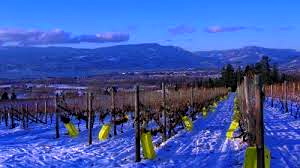
Having as much control as possible in the vineyard is of utmost importance, especially since Okanagan weather patterns aren't always going to be a vineyard manager's or a winemaker's best friend. David also advises that "Winemaking in BC can yield some pretty frightening chemistry to start with - definitely not the numbers we are taught to look for in New Zealand." And that's coming from comparisons with New Zealand - another cool climate region.
"Rumour" has it that David was born in Canada but raised in New Zealand. He returned to Canada and the Okanagan in 2009, however, as a particular Canadian lass had caught his eye. Once married, "the Okanagan Valley became very attractive if I wanted to stay in the wine industry and in Canada."
Prior to his return to Canada though, David managed to fit a variety of wine regions onto his resumé. He spent time with Neudorf and Giesen while in New Zealand and he still owns a share in Auburn Wines in Central Otago, managing to travel back every year for harvest. He also spent time with heavy-hitting Aussie producer, Henschke Cellars, with Oregon producer, Archery, and in Burgundy with Domaine Dublère. While each of those wineries was different from the others, David found that "a similar core value of vineyard first ran through all of the cellars."
When it came time to pick a wine to add to The List with this post, I looked for an '09 Riesling that I was supposed to have in our "cellar." It wasn't there and I realized that it must have been the bottle that I took to WBC12 in Portland last year. The conference had an event where all the attendees brought a bottle of their own choosing to be opened for the enjoyment of all. I'd taken a bottle of Tantalus Riesling, feeling that it would be a wonderful ambassador for BC. Funny thing was, Luke Whittal, my bud behind the Wine Country BC blog, had brought the very same bottle. Of all the wines in the world, we both chose the same bottle. It also meant that I had to scramble to find another bottle for this post and that's not necessarily the easiest thing to do. Luckily, some new white wine releases are starting to hit local shelves and, as a result, Boo and I were treated to our first white of the 2012 vintage.
1326. 2012 Tantalus Riesling (VQA Okanagan Valley)
After a slow start, 2012 was a warm and sunny vintage for the Okanagan and that only seemed to help bring riper fruit notes to the resulting wine. High acidity and a "racy citrus" profile have been a hallmark for Tantalus Rieslings and, despite the heat of the season, that zing was still there. Citrus notes just leaped out of the glass at us but the palate was so much more than just lemon and lime. The wine is produced from vines planted in 1985 and 2005. The juice from those 1978 vines goes to the Old Vines Riesling - and recently to the Natural Brut sparkling wine that David is having particular fun making - and I think that's why I don't find this wine to show nearly as much minerality as the Old Vines wine does. That's not necessarily a bad thing, however, particularly when just sipping away. I generally find the "regular" Riesling to be more approachable to most palates.
I know that there definitely wasn't enough wine in the bottle that we opened though. Too bad Luke hadn't dropped by with a second bottle again.
After Riesling, Pinot Noir sees the largest production at Tantalus and there is a bit of Chardonnay and Pinot Meunier (used in the Rosé) grown as well but total production is definitely limited. I'm not sure of current totals but I read that only 4,500 cases were produced in 2011. I believe that, with the new facilities, the hope is that the winery might eventually hit the 10,000 case mark.
I've got to admit, as well, that I've always found Tantalus to have the most striking labels. Each of the wines features a First Nations mask that was carved by Tlingit artist, Dempsey Bob. Simple. Elegant. Stunning. If you ask me.
Despite just having returned from harvest in New Zealand and having to jump head first into the new season's winery activities here, David took the time to respond to a few additional email questions I had forwarded. I wondered about whether he sees any foreseeable trends happening in BC wine and what his take might be on the debate around BC's needing or not needing a signature grape or grapes. As for trends, he believes the bigger producers will continue to get bigger and that a lot of the "ma and pop" operations are going to struggle unless they have deep pockets.
Despite the fact that the Okanagan Valley isn't that big, he also sees more and more regional focus happening down the road and an even further reduced presence of the old hybrid varieties. He knows that, unless global warming kicks into overdrive, the Tantalus vineyard isn't capable of fully ripening Cab Sauv or Merlot. He advised that he'd love to work with Syrah - and the vineyard does have a tiny plot - but the best he's been able to attempt so far is an icewine version as the vineyard is just too cool to fully ripen the Syrah. On the other hand though, he figures that Pinot Noir in the south of the Valley tends to get too high in sugar before flavour ripeness occurs, resulting in big, heavy Pinots that resemble Syrah more than they do varietal Pinots. He posits that, as more growers and owners understand the terroir of their vineyards, there will be an increasing spread between what is planted in the southern and northern parts of the Valley and will be fewer wineries trying to produce a wide variety of wines to appease all palates.
Even with all the history behind the Tantalus vineyard, David points out that the Okanagan is still a young wine region. He notes, however, that it is "coming on in leaps and bounds." Many of the region's more interesting vineyards still haven't been planted for even ten years. He states, "if you like what we are all doing here in BC now, just wait and see what we will be producing in another ten years."
When asked about the roll of social media in Tantalus' game plan, David notes that it "is imperative to the success of our company and will have more and more weight as the world turns to social media as a primary source of communication." He is particularly glad, however, that Stephanie Mosley, the winery's social media/jill of all trades is excellent at it and he can leave it in her capable hands - even though he tries to understand it as best he can. Their website can be found at tantalus.ca and you can follow them on Twitter at @tantaluswine.
On a final note, if he could, David would love an opportunity for all of the WBC13 delegates to have a chance to try their Old Vines Riesling. They "make very little from our best parcel of fruit every year and it is the best lens into our vineyard and winemaking philosophy of site and vintage expression being paramount." I'm certainly hoping that opportunity arises. You likely should as well - because, if it does, you should jump at it.
I'm happy to say that this travesty is set to be remedied next week though!
Following that shocking reveal, I might as well start this post by getting another little story out of the way - especially since it's a marketer's dream come true and it'd be remiss of me not to tell it. Jancis Robinson, one of the world's most renowned wine writers has heralded Tantalus on a couple of occasions and one site even quoted her as announcing Tantalus as the "crème de la crème...of Canada." Just this Spring, Ms. Robinson chose Tantalus wines as two of her top three picks for Canadian white wines in a scheduled tasting - the 2008 Old Vines Riesling was her top choice and the 2010 Riesling was third. If that doesn't cause you to stop and take note, I don't know what does.
The winery and vineyard are found a short distance from downtown Kelowna, where Tantalus is part of the Lakeshore Winery Route - along with CedarCreek, Summerhill and St. Hubertus. Their first vintage was only in 2005; however, the vineyard has a storied history. Fifty acres of undulating topography, it was first known as Pioneer Vineyards when, back in 1927, the Tantalus site was one of the first in BC to be planted with grapes. As such, it is now noted as the one of the oldest continuously producing vineyards in the province - if not the oldest.
Now, no one in BC was growing vinifera grapes back in the early 1900's; indeed, the grapes were largely being grown as table grapes. So, it's no surprise that the vineyard has undergone change over the years. Ownership has as well. In 1948, the original owner, J.W. Hughes, sold individual vineyards to some of his vineyard managers. Marin Dulic was one of those foremen and three generations of the Dulic family shepherded the property for the next half century. Initial steps were taken to change over some of the hybrid vines in 1978 when Den Dulic started planting Riesling vines. Those experimental vines are still producing - making them some of the oldest in the valley - and the fruit provides the backbone for some of those wines lauded by Jancis Robinson and others. The family also started planting some German clone Pinot Noir vines around 1983.
The Dulics sold all their grapes through the decades until Marin's granddaughter, Susan, took the family operation to another level and opened Pinot Reach winery in 1997. As the name might indicate, Susan's goal was to highlight Pinot varieties. The reality of the vineyard, however, was that Pinot Reach received its highest accolades for its Rieslings. A note that wasn't lost on Vancouver investment dealer, Eric Savics, when he purchased the property and winery from the Dulics in 2004. Savics uprooted some of the lesser hybrid varieties still found on the property, like Bacchus, and focused almost entirely on Riesling.
![]() |
| Photo courtesy of Lakeshore Wineries |
As you might expect with the LEED certification of its new building, Tantalus also practices environmental sustainability in the vineyard. Although the vineyard isn't certified, organic farming methods are used as much as possible.
It was around the time of the planning for the new winery that Matt Holmes moved on and was replaced by current winemaker, David Paterson. From day one, Tantalus wines have been particularly terroir-driven but, as part of his job as a winemaker, David strives to capture "the purity of flavours straight from the vineyard." He states that, "If we get it right in the vineyard, I don't have to do a lot of 'winemaking.'" It can only help in the goal of "getting it right" that all of Tantalus' wines are made from estate grown fruit.
![]() |
| Photo Courtesy of Wine Access |
"Rumour" has it that David was born in Canada but raised in New Zealand. He returned to Canada and the Okanagan in 2009, however, as a particular Canadian lass had caught his eye. Once married, "the Okanagan Valley became very attractive if I wanted to stay in the wine industry and in Canada."
Prior to his return to Canada though, David managed to fit a variety of wine regions onto his resumé. He spent time with Neudorf and Giesen while in New Zealand and he still owns a share in Auburn Wines in Central Otago, managing to travel back every year for harvest. He also spent time with heavy-hitting Aussie producer, Henschke Cellars, with Oregon producer, Archery, and in Burgundy with Domaine Dublère. While each of those wineries was different from the others, David found that "a similar core value of vineyard first ran through all of the cellars."
When it came time to pick a wine to add to The List with this post, I looked for an '09 Riesling that I was supposed to have in our "cellar." It wasn't there and I realized that it must have been the bottle that I took to WBC12 in Portland last year. The conference had an event where all the attendees brought a bottle of their own choosing to be opened for the enjoyment of all. I'd taken a bottle of Tantalus Riesling, feeling that it would be a wonderful ambassador for BC. Funny thing was, Luke Whittal, my bud behind the Wine Country BC blog, had brought the very same bottle. Of all the wines in the world, we both chose the same bottle. It also meant that I had to scramble to find another bottle for this post and that's not necessarily the easiest thing to do. Luckily, some new white wine releases are starting to hit local shelves and, as a result, Boo and I were treated to our first white of the 2012 vintage.
1326. 2012 Tantalus Riesling (VQA Okanagan Valley)
After a slow start, 2012 was a warm and sunny vintage for the Okanagan and that only seemed to help bring riper fruit notes to the resulting wine. High acidity and a "racy citrus" profile have been a hallmark for Tantalus Rieslings and, despite the heat of the season, that zing was still there. Citrus notes just leaped out of the glass at us but the palate was so much more than just lemon and lime. The wine is produced from vines planted in 1985 and 2005. The juice from those 1978 vines goes to the Old Vines Riesling - and recently to the Natural Brut sparkling wine that David is having particular fun making - and I think that's why I don't find this wine to show nearly as much minerality as the Old Vines wine does. That's not necessarily a bad thing, however, particularly when just sipping away. I generally find the "regular" Riesling to be more approachable to most palates.
I know that there definitely wasn't enough wine in the bottle that we opened though. Too bad Luke hadn't dropped by with a second bottle again.
After Riesling, Pinot Noir sees the largest production at Tantalus and there is a bit of Chardonnay and Pinot Meunier (used in the Rosé) grown as well but total production is definitely limited. I'm not sure of current totals but I read that only 4,500 cases were produced in 2011. I believe that, with the new facilities, the hope is that the winery might eventually hit the 10,000 case mark.
I've got to admit, as well, that I've always found Tantalus to have the most striking labels. Each of the wines features a First Nations mask that was carved by Tlingit artist, Dempsey Bob. Simple. Elegant. Stunning. If you ask me.
![]() |
| Photo courtesy of wineandspirits.com |
Despite the fact that the Okanagan Valley isn't that big, he also sees more and more regional focus happening down the road and an even further reduced presence of the old hybrid varieties. He knows that, unless global warming kicks into overdrive, the Tantalus vineyard isn't capable of fully ripening Cab Sauv or Merlot. He advised that he'd love to work with Syrah - and the vineyard does have a tiny plot - but the best he's been able to attempt so far is an icewine version as the vineyard is just too cool to fully ripen the Syrah. On the other hand though, he figures that Pinot Noir in the south of the Valley tends to get too high in sugar before flavour ripeness occurs, resulting in big, heavy Pinots that resemble Syrah more than they do varietal Pinots. He posits that, as more growers and owners understand the terroir of their vineyards, there will be an increasing spread between what is planted in the southern and northern parts of the Valley and will be fewer wineries trying to produce a wide variety of wines to appease all palates.
Even with all the history behind the Tantalus vineyard, David points out that the Okanagan is still a young wine region. He notes, however, that it is "coming on in leaps and bounds." Many of the region's more interesting vineyards still haven't been planted for even ten years. He states, "if you like what we are all doing here in BC now, just wait and see what we will be producing in another ten years."
When asked about the roll of social media in Tantalus' game plan, David notes that it "is imperative to the success of our company and will have more and more weight as the world turns to social media as a primary source of communication." He is particularly glad, however, that Stephanie Mosley, the winery's social media/jill of all trades is excellent at it and he can leave it in her capable hands - even though he tries to understand it as best he can. Their website can be found at tantalus.ca and you can follow them on Twitter at @tantaluswine.
On a final note, if he could, David would love an opportunity for all of the WBC13 delegates to have a chance to try their Old Vines Riesling. They "make very little from our best parcel of fruit every year and it is the best lens into our vineyard and winemaking philosophy of site and vintage expression being paramount." I'm certainly hoping that opportunity arises. You likely should as well - because, if it does, you should jump at it.
Labels:
Favourites,
Okanagan,
Riesling,
Wine Bloggers Conference
Wednesday, May 22, 2013
Looking Ahead to WBC13 - Week 7 - Nk'Mip Cellars
I confess to having missed a couple of weeks on my pre-Wine Bloggers' Conference Road Trip. Some might well argue that an actual "get-in-the-car-and-drive" road trip hardly trumps or pre-empts a virtual road trip; however, I'm afraid I could only handle one at a time. Despite some lofty hopes of keeping up with the blog - and posting some more pre-WBC13 winery visits - the reality of taking a stab at the Life of Riley proved a little too time-consuming to sit and blog with the laptop.
I think that might be a good thing though. If I ever get caught up and write a bit about our vacation (after all, lots of wine was sacrificed to fuel our trip), I'll check back with you to see what you think.
It's about time I returned to my pre-Conference tour of some of my favourite BC wineries though and, this time around, I'm going to visit Nk'mip Cellars - North America's first aboriginal owned and operated winery. The winery is located just outside of Osoyoos and is owned by the Osoyoos Band - one of the seven bands that make up the Okanagan Nation.
I find the Nk'mip story to be both interesting and inspiring. It began in the 1960's with the planting of vineyards on Band lands found a little ways up the Okanagan Valley - closer to Oliver - in what is now known as the Inkameep Vineyard. No one in the Valley was planting vinifera grapes at that time but the Band sold its hybrid grapes to the wineries of the day and eventually began replanting the vineyards with vinifera grapes. The Band's Riesling vines are now some of the oldest in the valley. Much of the credit for those original vineyard operations is given to Sam Baptiste, the Band Chief at the time. Upon retiring as Chief, he continued his involvement with the operations he helped create and he is now the vineyard manager.
Current Chief, Clarence Louie, was first elected in 1985 and he has continued to move the Band's presence forward in the winemaking business as the industry continued to develop in the Valley. The Band's achievements with him at the helm have earned Chief Louie many business awards - including Aboriginal Business Leader of the Year - All Nations Development Corporation in 1999 and the 2000 CANDO Award for Economic Developer of the Year. During these years, Chief Louie has also shepherded the Band's vineyard operations into a full-fledged winery. Nk'mip Cellars was opened in 2002 - with state of the art facilities - as a joint venture with Vincor, one of the biggest wine corporations in Canada (and now part of the global Constellation Brand).
Not only is the winery a testament to the Band's dedication to creating a culture of self reliance, but it makes a comprehensive range of award-winning, tasty wines - to the extent that Nk'mip is continually named one of the top wineries in Canada in past Wine Access Canadian Wine Awards - including Top BC Winery in last year's edition.
1323. 2006 Nk'mip - Qwam Qwmt Syrah ( VQA Okanagan Valley)
The winery produces two levels of wines - the introductory Winemaker's label and the premium Qwam Qwmt series. In the local Okanagan language, "Qwam Qwmt" means "achieving excellence" and this latest wine to be added to The List was a dark-fruited, spicy bit of excellence by our take.
The winery now has the capacity to produce 16,000 cases annually of its range of reds and whites (there were around 950 cases of the '06 Syrah made) and all of the grapes used by Nk'mip are grown by the Band - either in the vineyard immediately surrounding the winery or in the Inkameep Vineyard. These lands in the southernmost part of the Okanagan Valley are actually the northern tip of the Sonoran Desert - the desert that runs all the way up the West Coast from Mexico - and is Canada's only pocket desert. The region boasts long, hot summer days and cool nights and allows the Band to both ripen big red grape varieties and maintain good acidity levels.
And there's no mistaking the fact that the winery is found in desert country. We made a quick drive up to the Okanagan to take in some of the sagebrush spotted landscape (and wines) during the summer of 2003 when our bud, Merlot Boy, was visiting from Australia. Under somewhat surreal circumstances, we sipped back on a glass of Nk'mip wine on their new patio as we watched water bombers dip into Osoyoos Lake to collect water to fight small outbreaks of fire in the surrounding hills. Think Nero playing the fiddle while he watched Rome burn. The fires around us weren't that intimidating at the time; however, they were all part in parcel of the wild fire that threatened to ravage much of Okanagan wine country that summer.
Although not the most active participant among BC wineries, Nk'mip does have a Twitter presence and came be followed at @nkmipcellars. You can also learn more about additional Band operations like the Nk'mip Desert Cultural Centre, Resort and Gold Course at both the winery website and the Band website. I find Nk'mip's story to be both intriguing and inspiring - and it certainly doesn't hurt that the wines are enjoyable as well. Hopefully, WBC13 participants will get an opportunity to discover Nk'mip themselves.
I think that might be a good thing though. If I ever get caught up and write a bit about our vacation (after all, lots of wine was sacrificed to fuel our trip), I'll check back with you to see what you think.
It's about time I returned to my pre-Conference tour of some of my favourite BC wineries though and, this time around, I'm going to visit Nk'mip Cellars - North America's first aboriginal owned and operated winery. The winery is located just outside of Osoyoos and is owned by the Osoyoos Band - one of the seven bands that make up the Okanagan Nation.
I find the Nk'mip story to be both interesting and inspiring. It began in the 1960's with the planting of vineyards on Band lands found a little ways up the Okanagan Valley - closer to Oliver - in what is now known as the Inkameep Vineyard. No one in the Valley was planting vinifera grapes at that time but the Band sold its hybrid grapes to the wineries of the day and eventually began replanting the vineyards with vinifera grapes. The Band's Riesling vines are now some of the oldest in the valley. Much of the credit for those original vineyard operations is given to Sam Baptiste, the Band Chief at the time. Upon retiring as Chief, he continued his involvement with the operations he helped create and he is now the vineyard manager.
Current Chief, Clarence Louie, was first elected in 1985 and he has continued to move the Band's presence forward in the winemaking business as the industry continued to develop in the Valley. The Band's achievements with him at the helm have earned Chief Louie many business awards - including Aboriginal Business Leader of the Year - All Nations Development Corporation in 1999 and the 2000 CANDO Award for Economic Developer of the Year. During these years, Chief Louie has also shepherded the Band's vineyard operations into a full-fledged winery. Nk'mip Cellars was opened in 2002 - with state of the art facilities - as a joint venture with Vincor, one of the biggest wine corporations in Canada (and now part of the global Constellation Brand).
Randy Picton was brought on board as winemaker in 2002 and has been with Nk'mip ever since. Although not a Band member himself, Picton has mentored Band member, Justin Hall, who started with the winery in 2004 and has worked his way up from cellar hand to assistant winemaker. Aaron Crey, a member of the Sto:lo Band from outside Vancouver, has also taken up residence with the winery and is now the cellar supervisor. Both Hall and Crey have completed winemaking programs at Okanagan University College and have respectively worked on vintages in Western Australia and New Zealand to further their abilities and knowledge.
Not only is the winery a testament to the Band's dedication to creating a culture of self reliance, but it makes a comprehensive range of award-winning, tasty wines - to the extent that Nk'mip is continually named one of the top wineries in Canada in past Wine Access Canadian Wine Awards - including Top BC Winery in last year's edition.
1323. 2006 Nk'mip - Qwam Qwmt Syrah ( VQA Okanagan Valley)
The winery produces two levels of wines - the introductory Winemaker's label and the premium Qwam Qwmt series. In the local Okanagan language, "Qwam Qwmt" means "achieving excellence" and this latest wine to be added to The List was a dark-fruited, spicy bit of excellence by our take.
The winery now has the capacity to produce 16,000 cases annually of its range of reds and whites (there were around 950 cases of the '06 Syrah made) and all of the grapes used by Nk'mip are grown by the Band - either in the vineyard immediately surrounding the winery or in the Inkameep Vineyard. These lands in the southernmost part of the Okanagan Valley are actually the northern tip of the Sonoran Desert - the desert that runs all the way up the West Coast from Mexico - and is Canada's only pocket desert. The region boasts long, hot summer days and cool nights and allows the Band to both ripen big red grape varieties and maintain good acidity levels.
And there's no mistaking the fact that the winery is found in desert country. We made a quick drive up to the Okanagan to take in some of the sagebrush spotted landscape (and wines) during the summer of 2003 when our bud, Merlot Boy, was visiting from Australia. Under somewhat surreal circumstances, we sipped back on a glass of Nk'mip wine on their new patio as we watched water bombers dip into Osoyoos Lake to collect water to fight small outbreaks of fire in the surrounding hills. Think Nero playing the fiddle while he watched Rome burn. The fires around us weren't that intimidating at the time; however, they were all part in parcel of the wild fire that threatened to ravage much of Okanagan wine country that summer.
Although not the most active participant among BC wineries, Nk'mip does have a Twitter presence and came be followed at @nkmipcellars. You can also learn more about additional Band operations like the Nk'mip Desert Cultural Centre, Resort and Gold Course at both the winery website and the Band website. I find Nk'mip's story to be both intriguing and inspiring - and it certainly doesn't hurt that the wines are enjoyable as well. Hopefully, WBC13 participants will get an opportunity to discover Nk'mip themselves.
Subscribe to:
Posts (Atom)


