Showing posts with label Australia. Show all posts

Sunday, September 6, 2015

The 2001st Bottle - Quite the Odyssey


Six and a half years later and here we are: time to add the 2001st - and, therefore, final - wine to The List. As the journey behind this blog has always been to celebrate the places and the people that we sipped away at and with, I think it's fitting that we reach our goal with a very special gathering of our Dinner Club.

I've personally been in a dinner club of one sort or another since university days - and that's over 30 years ago. However, our current gang (with a few changes along the way as significant others appeared and one couple retired from the club) is coming up on twenty years. Indeed, one of my earliest posts on this Odyssey was at a Dinner Club gathering at Chez Tyrant.

And the memory of that dinner and others makes tonight's feast and post all the more special. Not only am I able to pull the cork on the "last" bottle but I get to share it with friends who have been with me all along the journey. Further, we all got to raise our glasses in a heartfelt toast to Tyrant - our dear friend who passed away a couple of weeks ago. I know Tyrant was looking forward to the 2001st bottle almost as much I was because we'd been talking about pulling a few special treats from his cellar. And I do mean "cellar" in Tyrant's case. As a little example, he'd generously brought along a bottle of 1982 Grange to my 50th birthday party and it remains one of the most memorable wines I've been fortunate enough to enjoy. Unfortunately, that bottle was before I'd started the blog and, therefore, not on The List.

I'll never know the wine Tyrant had tentatively earmarked for tonight's dinner but we all managed to find a few noteworthy bottles for the occasion to knock back with him in mind.

N.V. Lanson Black Label Brut (Champagne AOC - France)

2014 Domaine L'Ostal Cazes Rosé (Pays d'Oc IGP - France)

It turns out that we had more than enough wines this evening to reach bottle number 2001. So, it was of no concern that our first two wines were ones that had already been added to The List. One of the "rules" that I had set out for myself at the start of the blog was that I couldn't add the same vintage of the same bottle more than once to The List. Lanson Black is one of my favourite Champagnes and, being a non-vintage wine, the first bottle of this baby made it to the blog long ago.

The Rosé was a recent discovery but a pleasant one all the same. The wine had been recommended at a local government liquor store when I was picking up wines for this year's Giro di Burnaby viewing party. It was a hit then and I'm more than happy to join in on a glass whenever it shows up. I often tried to avoid revisiting a bottle that I'd previously enjoyed simply because I wouldn't be able to add it to The List. Guess that won't be so much of a concern anymore.

Tonight's Dinner Club was being hosted by Lady Di and She Who Must Be Obeyed and the menu was classically inspired as Lady Di was looking to put some of the skills she'd been picking up at various cooking classes to good use.

On any normal evening, I could have easily been sated with the bubbly, the Rosé and the fresh burata served with the tastiest of heirloom tomatoes. As if that was ever going to be the full extent of a Dinner Club though.

1997.  2013 William Fevre - Petit Chablis (Petit Chablis AOC - Burgundy - France)

Unoaked Chardonnay and Oysters Motoyaki. I don't think anything else needs to be said. Seafood, acidity, cream.

I mentioned Lady Di was going after some classic dishes and pairings tonight. Two for two so far in my book.

1998.  2007 Rolf Binder - Heinrich Shiraz Mataro Grenache (Barossa Valley - Australia)

1999.  2008 Langmeil Orphan Bank Shiraz (Barossa Valley - Australia)

It turned out that our wine choices were a little more red-centric than the menu was but that can happen when we all take such pleasure in not disclosing the Dinner Club's bill of fare in advance. The Gazpacho wouldn't normally scream big, juicy reds, but there wasn't a single complaint to be heard until there was no more wine to be poured. I suppose it goes to show that sometimes an unforeseen pairing can work out far more favourably than you might expect.

Then again, it's entirely possible that these two wines could have been paired with a slice of toast and some Vegemite and we still would have raved. Langmeil is another favourite of mine - although we don't usually splurge on the more premium Orphan Bank Shiraz. If I had to pick an Aussie house wine (and was only allowed to spend $30), the Langmeil Valley Floor Shiraz would very likely be my first choice. The Orphan Bank is just that much more layered and nuanced.

I don't think I'd tried the Heinrich before but this is a GSM (or SMG) blend that brother and sister winemakers, Rolf and Christa Binder, named in memory of their father. I don't know if Jeaux and Matinder were aware of that fact when they chose this wine but it seems uniquely appropriate for a Dinner club in Tyrant's memory.

With these two wines, there was no doubt that we were partying like it was 1999 - because, indeed, this course served up bottle #1999 on The List.

2000.  2003 Baron Philippe de Rothschild - Cabernet Sauvignon (Vin de Pays d'Oc - France)

The next step to happiness was beef tenderloin - cooked to order - served with baked kale and mushrooms in a wine reduction. The girls definitely had a challenging go of it with the timing on the cook of the beef since they had to juggle Jeaux and Matinder's penchant for blue steak through to Boo's more pedestrian medium cook.  But, of course, they were more than up to the task and my rare-medium-rare arrived spot on.

The tenderloin was paired (by happenstance) with two Rothschild wines - albeit from slightly different ends of the spectrum. It's a rare occasion that I get to try a $15 bottle side-by-side with its more well-heeled "cousin."  While Tyrant likely had some actual Mouton Rothschild in his cellar, a bottle of Le Petit Mouton was the best that I could come up with for the occasion.

2001.  2006 Mouton Rothschild - Le Petit Mouton (Pauillac AOC - Bordeaux - France)

As I knew this bottle would officially be number 2001 on The List, I was hoping for a bit of "knock 'em out of the park" sip. The Wine Advocate declared that "the 2006 Le Petit Mouton is the finest example of this cuvée I have tasted." The winemaker noted, "Aromas of berry fruit, vanilla and spice reflect its great complexity. Round, lush, full-bodied and supported by fine tannins, it is long and ample on the palate."

Not too bad as far as pedigrees and reviews go. Amen to that. Sounds like just the wine to hit the blog's final target and goal with.

Funny thing is that, the Petit Mouton didn't really speak to anyone at our table - even when paired with the tenderloin. The wine might be right on point for the pros but, as much as we might have wanted it to, it didn't titillate our palates - at least not to the extent that many of the other wines gracing our table did.

I suppose that's part of the joy of trying wines of every stripe. The best way to discover a wine that moves you is the try as many as you can.

2001+  2012 Tenuta Sette Ponti - Crognolo Toscana (Toscana IGT -Tuscany - Italy)

2001+  2010 Fontanafredda - Serralunga D'Alba Barolo (Barolo DOCG - Piedmont - Italy)

As previously mentioned in this post, some of the night's pairings weren't what you'd call classic. By the time our dessert of Meyer Lemon Panna Cotta with chocolate pebbles arrived, we were down to a couple of big Italian reds - a Supertuscan and a Barolo. I suppose that the unorthodox pairing was of no concern though. By now, we were simply taking in the evening and these beauties were bonus wines for The List anyhow.

Noticing that the wines had been poured as a trio of national pairings, we held a little poll of the table. The Aussies came out on top as our favourite wines of the evening, followed by the Italians and then the French. Not that there was any grand international tasting or bragging rights at stake. After all, there were (surprisingly) no Okanagan wines poured with dinner.

So, the latest round of the Dinner Club came to a close - as has the formal task of this blog. Having added the 2001st wine to The List, I now get to take some time and decide the direction the blog might take in the future. It's been quite the Odyssey. No doubt about it.

The wines. The people. The events.

It's made for an incredible adventure and, to be honest, a whole lot more work than I'd ever envisioned when I decided to upload that very first post. Drinking the wine was easy. No doubt about that. Writing the posts was a whole other exercise. Boo has called himself a "blog widow" for years - and there's a lot a truth to that.

And so, as I happily brace myself to hit the "Publish" and finish The List and my formal Wine Odyssey, I figure this won't be the end of the blog. It will definitely take a different - and not so demanding - structure but I'm hardly done with my love of wine. And that indulgence and amusement is something that will still drive me to put finger to keyboard now and then.

In the meantime, I need to send out big bouquets of gratitude to everyone who's encouraged, commented on, participated in - and endured (right Boo?) - my indulgence. It's been the most extraordinary learning experience.

I toast all of you.

And, as a final act of appreciation, I raise my glass to Tyrant. Having shared his humour, his generousity, his friendship and many a fine wine, it's a joy to share the 2001st bottle with you in mind. I wish you'd been there in person but you were definitely there in our hearts and minds. Skoal, dear friend.


Tuesday, September 1, 2015

An Artful Chard

If you've been reading this last series of posts, you've likely noticed that I've been pulling some of our bigger guns out of the cellar for these final bottles to close out The List before I hit the 2001st wine. Tonight's wine definitely fits the bill of a "big gun." We've only got one bottle and that's because I've only ever seen one bottle for sale in a shop - and that was in New York City. I don't know that anyone carries it in Vancouver - and, even if someone did, I'd be afraid to see what price it comes in at.

I think it's fair to say that the Vancouver market has never seen many Margaret River wines on a regular basis. The region has been one that I've always had a fondness for though - ever since I tried and quite liked a bottle while I was in Australia in 1996. I returned to Vancouver and could only find two or three bottles from the region in our city and, naturally, that was at one of the premium wine shops. I tried another of the district's wines. Enjoyed it. And, with the region being two for two, I've always had a positive outlook on the region's wines.

That being said, I've been holding on to tonight's bottle for an "occasion." I think hitting #1995 on The List qualifies.

1995.  2004 Leeuwin Estate Art Series Chardonnay (Margaret River - Australia)

Leeuwin Estate is family owned and operated and, with its bevy of national and international accolades and awards, is one of the - if not the - pre-eminent wineries in the Margaret River region. Unlike some other Aussie wine regions - like the Barossa - winemaking in Margaret River didn't really get started until the 1970's. Indeed, it was only in 1969 that Leeuwin Estate was one of the five founding wineries in the Margaret River district located to the south of Perth in Western Australia. Leeuwin, however, didn't actually make any vintage wines for release until 1978. It's been all uphill from there.

Making three separate labels, Leeuwin's Art Series wines are their "most opulent and ageworthy" wines. The first vintage of Art Series Chardonnay was 1980 and it arrived on the scene with a declaration by Decanter magazine that it was the best Chardonnay in the world in 1982.

My introduction to Leeuwin's Art Series Chardonnay was at an Australian Wine Appreciation Society tasting in Vancouver that involved a blind tasting of fifteen or so Chardonnay's from around the world. Leeuwin's was, by far, the favourite wine of the evening - including my score card. However, as much as I kept an eye open for it, I could never find a bottle of the wine until that New York wine shop.

The region has continued to have a romanticized hold on me though and, when Boo and I made a trip back to Australia in 2012, we decided to travel out to Perth for a quick venture down to Margaret River with Merlot Boy and Margarita. We managed to fit in a dinner at Leeuwin and finally added a bottle of the Art Series Chard to The List - along with a couple other Leeuwin wines.

It's now time to add a second vintage to The List before this Odyssey peters out.

We had quite the scare opening this bottle though. The cork broke on me while I was pulling it out and I couldn't help but worry that, if the cork was faulty, the wine might be faulty as well. There was a heavy sigh of relief though after the first taste. The wine was still rich and velvety on the tongue. There was noticeable, although refined, oaking and some subtle hints of tropical fruit still shone through.

A rare treat but oh so enjoyable. There haven't been many wines on my journey that have as hallowed a history as the Art Series Chardonnay but isn't that exactly why we try to experience as many different wines and regions as we can. It makes those special occasions all that more special.

Saturday, August 29, 2015

Iconic Friends Deserve Iconic Wines

From the start of this blog and Odyssey, a major focus was always going to be who we drank our wines with and the occasions where we drank the bottles. It's definitely fitting that we were able to schedule a dinner with Elzee this close to hitting the 2001st bottle. We know very well that it's almost inevitable that, every time we get together with the lovely and talented Elzee, there's likely going to be great food and equally fine wine.

I'm happy to say that this occasion was no different - even though this was a simple, spur-of-the-moment invite to our place.

1993.  2014 Orofino Moscato Frizzante (Similkameen Valley)

When I look back on all the wines that have made up the 2001 bottles, I'm sure there will be more Orofino wines on The List than all but a handful of wineries. Boo and I have been fans of the "straw-bale winery" pretty much since Day 1. We were lucky to discover Orofino very early in its existence as its owners, growers, winemakers, proprietors (and likely everything else needed), John and Virginia Weber, presented some of their first vintage at a BC Wine Appreciation Society tasting of wines from the, at that time, new on the scene Similkameen Valley.

Although its now been around for a handful of vintages, Moscato Frizzante is one of Orofino's newest wines. It is also a very popular one as it arrived as a playful, easy drinking Moscato with a splash of Riesling and Pinot Gris that brings out an acidity to counter the fruity and floral base of Moscato. In a region that really only started to make a name for itself in the last decade, t's a bit of a surprise that much of the fruit for the wine comes from Muscat vines are over 25 years old now. The fruit from those established vines, planted on Orofino's home vineyard, is augmented with grapes from the neighbouring Hendsbee vineyard, those vines having been more recently planted around 2009.

The carbonation is measured; there isn't an abundance of fizz or mousse but the slightly off-dry palate makes the wine an excellent start to an evening. As it did for us.

I think the Okanagan Valley has established itself as a premium region for producing more serious, traditional even, Champenoise-styled sparkling wines (just look at Blue Mountain, Stellars Jay, Tantalus and Summerhill) but there's a new breed of bubbly that's starting to emerge and Orofino's Moscato is definitely helping to lead the way.

1994.  2008 Clarendon Hills - Astralis (McLaren Vale - Australia)

As I journey along this Odyssey and learn more and more about wine, one of the most valuable lessons has been about the pairing of food and wine - to bring out the best attributes of both simultaneously. One of the biggest discoveries I encountered was that we "drank red but ate white." I now try much harder to match whites, rosés and lighter reds with many of our dinners while saving our beloved big reds for meatier occasions. That re-adjustment of my pairing habits over the years has definitely increased our pleasure of the wine we're drinking.

That being said, tonight's pairing does not follow any of that logic. An Aussie Shiraz isn't likely the best sip to pair with mussels - even if there are yam frites and chipotle mayo alongside - but I wanted to dip into the cellar for one of our landmark wines for this near "List-ending" bottle with Elzee.

I decided on a bottle of Astralis - although I can't say that I've tried it before or knew much about the winery. Astralis has been called an Aussie cult wine - particularly after wine critic, Robert Parker (love him or hate him) wrote in 1996, "This is the hottest wine in Australian wine circles, as it came out ahead of two great vintages of Henschke and Penfolds' Grange in a recent tasting. If readers can believe it, it is a bigger denser, more concentrated wine than the Grange." The bottle was another extravagance of one of Boo's border crossing jaunts and it seemed appropriate for the occasion.

 Clarendon Hills is a small (by Australian standards), family run winery and Astralis is the flagship wine of the Clarendon Hills portfolio. Roman Bratasiuk founded winery in 1990, 40 miles south of Adelaide in the McLaren Vale district and he immediately imprinted himself with a reputation as a bit of a maverick, starting with the fact that he calls his Astralis a Syrah instead of the ubiquitous Shiraz that is so associated with Aussie wine. Bratasiuk is one of the original pioneers of single vineyard wines in Australia. His first vintage of wines were single vineyard and that was rather unheard of in Aussie winemaking circles at the time. The winery now produces up to 19 single vineyard cuvées in its portfolio and his goal has been to express the varied terroir of McLaren Vale as opposed to gunning for the biggest, baddest fruit bomb possible. Indeed, the winery produces as many as seven single vineyard Syrahs annually.

The 1994 vintage was the first Australian wine to sell for $100 a bottle and, unfortunately, it hasn't gotten any cheaper. However, it is still substantially cheaper than a bottle of Grange - if you can even find it in our Vancouver market - and any bottle like this is going to be a special occasion in our household. Like when you're breaking bread with a dear friend and drinking one of the last bottles to be added to your List of 2001.

I'll have to admit that the wine wasn't nearly as fruit forward as I would have expected for an iconic Aussie Shiraz - but I guess that was the point. It is an Aussie Syrah after all. We might have opened it a tad early as Parker's Wine Advocate originally reported that this "Astralis is very young and primary promising much more to come! Consider drinking it from 2015 to 2025+" but I definitely lean towards fruit on the palate with my wines. So, drinking it a bit earlier in its lifetime is not out of the question for me as the fruit profile of a wine tends to diminish as it ages. Besides, waiting seven years for a bottle of wine is a tough task and we were within the suggested window.

Dinner was concluded with one of Boo's homemade apple pies; however, we didn't need to worry about overpowering the pie by the wine. The Astralis was long gone by the time the pie appeared. I'd blame it on Elzee scarfing all the wine but that's about as likely as me jumping into Another 2001 Bottles - The Sequel. Hopefully, there will be plenty more dinners with Elzee and multiple iconic wines but I'm guessing they won't be documented so regularly in a blog - at least not mine.

Tuesday, July 28, 2015

A Different Second Pass

1961.  2013 Nugan Estate - Alfredo Second Pass Shiraz (South Eastern Australia)

I'm a fan of Ripasso wines out of northern Italy but, every once in awhile, I run across a wine from a different country or region that uses the same concept of re-passing and re-fermenting a wine through the pomace (remaining skins) and yeast cells that are left over from another wine's fermentation. The concept endeavours to embolden the second wine, giving it a bolder texture and more complex flavour.

One site I saw referred to the Alfredo Second Pass as an "Australian Shiraz done Italian style." Being probably even a bigger fan of Aussie Shiraz, I was quick to grab for this bottle. There was a great hope that 1+1 might = 3.

I guess the big question are there even any Australian Shiraz wines that need to be emboldened and enlarged? The last decade has seen, if anything, a concerted effort on the part of Aussie winemakers to scale back the extravagance of their big Shiraz beasts. For me, it's a completely different story when it comes to Valpolicella. My first reaction to them is that they're usually a bit on the light side for me.

In any event, despite the big hopes, the Second Pass Shiraz didn't really pass the muster for me. At least, it didn't raise the bar at all. Granted, the nose burst out of the glass and was pure enjoyment. It's just that the wine on the palate simply came across as one of the many commercial wines that try to catch your eye nowadays. The added element of the Ripasso technique didn't seem to add any depth or nuance to an ordinary wine.

Don't get me wrong. We didn't have any problem finishing the bottle with dinner. It just didn't generate any "wows" or "we definitely need to pick this up again." Maybe my expectations were just a little too high.

It won't stop me from actively searching out more Ripassos.

Tuesday, May 12, 2015

A Solo Haan Wine

Having recently added seven new grape varieties to my Wine Century Club tally, Boo and I decided to take a slight detour from our Wild & Wacky Wine Week. It might seem a little tame - compared to Grechetto, Manto Negro and Plavac Mali - but a good Aussie red will always be a worthwhile endeavour to me.

1914.  2004  Haan - Wilhemus (Barossa Valley - Australia) 

I grabbed this Aussie take on a Bordeaux blend when some Aussie lamb pie was destined for our dinner plates. Most of the Aussie reds in the cellar involve Shiraz. So, there was a teensy bit of wild & wacky in this choice after all. Haan is not a producer that I recognize as normally being available in the Vancouver market. If memory serves, I picked this up when the winery attended the Vancouver International Wine Festival some years back. Seeing as how it's an '04, that would have been some years ago.

I'm not sure if the winery is still around as links to the winery's website don't appear to be up and running as I write this. I found one link that, for some reason, connected Haan to the Chateau Tanunda site. So, maybe the Haan winery and/or label was purchased by the Tanunda group and their grand assortment of wines.

The wine blends in all five of the "classic quintet" of red Bordeaux grapes and the back label breaks the wine down as Cab Sauv (35%), Merlot (27%), Cab Franc (23%), Petit Verdot (9%) and Malbec 6%). I guess it won't matter much whether we loved or hated the wine though because it wouldn't appear that we'll be finding any more.

For the record though, we found it to be an interesting departure from many of the big, fruit forward Barossa Shiraz wines that would have been coming out of Australia back in '04. There was still plenty of heft to the wine but some of that weight came from the new oak as opposed to simple fruit extraction.

As such, this may be the only (or solo) Haan wine we'll ever open (pardon the pun), but we definitely wouldn't turn another bottle - whether or not there was going to be lamb on the dinner table.

Tuesday, April 28, 2015

A Festival Treat from Kaesler

1907.  2012 Kaesler - Stonehorse GMS (Barossa Valley - Australia)

So, I find myself running into just a tiny, little problem nowadays. We don't exactly have any room in the cellar (such as our cellar is - a couple wine fridges, a closet, a spare bathroom tub and a stairwell) for new acquisitions. And, as much as I try to rein my buying habits and Boo tries to tighten the "No Buy Leash," there are always going to be occasions where I have no choice but to buy a new bottle or two. The annual Vancouver International Wine Festival is one such occasion.

As noted earlier in this blog, the theme region at this year's Festival was Australia and the Festival always has a number of wines available that aren't otherwise available in our market. As regular readers of the blog know, I readily admit that I have a jones for Aussie wines. So, needless to say, I didn't make things any easier on myself for space at home.

Since I didn't exactly have a spot for this bottle, I just decided to pull the cork - even though we have other bottles that likely should have been opened first.

I don't know much about Kaesler and their wines but I do recognize them from a couple of attendances at the Festival over the years. The vineyards and winery were founded by the Kaesler family in the 1890's and they operated the winery until 1986. The current owners purchased the winery in 1999 and have strived to take advantage of the premium lands and old vines ever since. The vineyards are farmed sustainably and the owners have expanded production into the Clare Valley and McLaren Vale (although those wines are released under the Clare Wine Co. and Nashwauk Vineyards banners respectively).

The Stonehorse is a classic Barossa GSM or Grenache, Shiraz, Mourvèdre blend - although this is a GMS with the Grenache playing a major (80%) role and the Mourvèdre (17%) and Shiraz (3%) balancing out the blend. The Stonehorse is from Kaesler's entry level series and is a fruit forward, easily accessible wine. The winery did, however, bring a major treat to the Festival as well - if you were lucky enough to try the wine while they still had some to pour. Kaesler's flagship wine - Old Bastard - is a single vineyard Shiraz, made from some of the vines originally planted back in the 1890's by the Kaesler family. I would have loved to add a bottle of the Old Bastard to The List but, unfortunately, the wine wasn't for sale as they only make 500 cases and it retails for over $200 a bottle when it is available. I did get my picture taken with a bottle though as I've been called a similar name often enough. In fact, an acquaintance that happened to be at the Kaesler table at the same time I was there suggested that I could make the Old Bastard my "signature" wine. I should be so lucky.

I always wonder how the wines I pick up at the Festival are going to taste when I get them home. Luckily, it's not too often that I open a bottle at home and wonder what the heck I was thinking at the Festival. There was no such concern here. The Stonehorse remained a good sip - always a good sign.

Now I guess we just need to do some drinking to free up some more space for more purchases.

Sunday, April 12, 2015

One Season Winds Up & Another Starts


Our curling league had its annual wind-up party and BBQ to close out the season that was. Our team didn't exactly burn up the league in the standings or the playoffs but I'm happy to say that we did win for Best Team Name - which is obviously one of the most coveted awards in our league. This is a gay curling league after all - and names and team uniforms count.

Teams names were chock full of puns and double entendres. So, we were happy boys to hear our name called out. The other teams nominated were:

- The Curldashians
- C.U.R.L.R (a spin on the hook-up app G.R.N.D.R.)
- Asstrogliderz
- Summoning Dorby Nordby (in honour of the Norwegian player of yore)
- Grab YOUR Stick (Let's Measure) (curlers will understand the measuring stick)

Our name, you ask? Fifty Sheets of Gay - our little homage to the ever-so-topical book/movie and to the curling "sheets" that our league plays on. (The name doesn't need any explanation when playing in a gay league.)

1896.  2013 Rosemount Estate Bottled Shiraz (Australia)

The party was held in one of the Davie Street bars - where beer and hard liquor are obviously more popular than wine because this was the ONLY red wine they had. The wine was a fruit forward (appropriate for our crowd I suppose) and an easy sip for the occasion.

We didn't close down the bar, however, because we wanted to get home in time to watch the debut of new season of Game of Thrones.

I'd pulled out the Jon Snow POP! figure that I'd picked up for the event - because it is a true event in our household - and set it on the mantlepiece below the flat screen. Surprisingly, I had to prompt Boo a bit before he picked up on it. I would have guessed that he'd notice one of his favourite characters much sooner than he did. Perhaps he was more excited about seeing the live-action Jon Snow after all these months than he could ever be about some little vinyl toy.

Ah, he knows nothing.

1897.  2010 Wild Goose Black Brant (375ml) (Okanagan Valley)

Given the dark nature of GoT (and the fact that we'd already eaten and polished off the bottle of Shiraz), I grabbed the half bottle of Black Brant to accompany some cheese. Black Brant is a port-style wine that is made from Maréchal Foch grapes and is named after the Black Brant goose that stops in BC during its migration between Mexico and Alaska.

I'd be willing to bet that you won't find a Portuguese Port that contains any Maréchal Foch in it. Then again, you don't find many of the standard Portuguese grapes grown in the Okanagan - if any. The wine is still made in the traditional manner, however, where the ripe grapes are vinified but the fermentation is arrested while the while there is still noticeable residual sweetness on the juice. The wine is then fortified by adding brandy or grain alcohol.

I searched a little but couldn't find out what the folks at Wild Goose fortified the Black Brant with. I do like asking because the answers go all over the map and some of the more recent BC wineries have been adding some rather unique spirits.

I'm a sucker for fortified wines. So, this was a marvellous end to a good day. A chance to celebrate a winning season (of sorts) on the ice. A new season of a favourite show. And another two wines added to The List.

Saturday, April 11, 2015

Birthday Treats at the Pear Tree


I was a happy Birthday Bob when Boo announced that we were heading off to the Pear Tree for dinner to celebrate yet another year having gone by. We shouldn't need an excuse to visit Scott and Stephanie Jaeger and what's likely our favourite restaurant in Vancouver but our waistlines couldn't handle eating this well all the time (even if I'd make some sacrifices wallet-wise to do so).

From scallops with English pea and bacon risotto through a surprise foie gras and brioche course to perfect beef and a birthday crème brûlee, every bite was masterful.

For a smaller restaurant, the Pear Tree has a fairly extensive wine list but, given the occasion, Boo and I brought along a treat from our own cellar.

1894.  2003 Penfolds RWT Shiraz - Bottle No. 38520 (Barossa Valley - Australia)

Seen by many as a baby brother to Penfold's flagship Grange, I'm just going to quote the winery's website to describe their take on this beauty: "Penfolds RWT Shiraz presents an admirable alternative to the multi-regional sourcing and American oak maturation that are hallmarks of Grange, expressing instead, single-region Barossa Valley Shiraz matured only in French oak. The initials RWT stand for 'Red Winemaking Trial,' the name given to the project internally when developmental work began in  1995. Naturally, now no longer a 'Trial,' RWT Shiraz was launched in May 2000 with the 1997 vintage. Its style is opulent and fleshy, contrasting with Grange, which is more muscular and assertive. RWT is made from fruit primarily selected for its aromatic qualities and fine texture rather than sheer intensity or power of flavour. The result is a wine that helps to redefine Barossa Shiraz at the highest quality level."

The wine was as rich as we'd expected it to be and it was restaurant co-owner and front of house wiz, Stephanie, who reminded us what an apt choice the bottle was since we'd celebrated my 50th at the restaurant as well and, on that occasion, Tyrant had brought along a bottle of Grange. To this day, that bottle of Grange remains one of my most memorable sips. That birthday was little bit before I started this Wine Odyssey, however, so the bottle never made it to The List. I'm thinking that, with little over 100 bottles to go before I hit my goal, this is the closest I'll get to knocking back a bottle of Grange before I hit the "finish line."

I might be able to accept that realization but I also see that the current vintage of RWT is up to $140 a bottle at the BC government stores. Maybe I should be dropping some hints as to future birthday presents because I'm certainly game to keep eating and drinking like this on all my birthdays (and any other days for that matter).

Tuesday, March 3, 2015

Langmeil - A Valley Floor Special

Now that this year's Vancouver International Wine Festival has concluded, I figured I might as well toast the festival and this year's theme region, Australia, with a favourite Aussie wine of mine. Langmeil wasn't one of the 60+ wineries that visited from Down Under this year but Shiraz was the variety featured in this year's global focus. So, I'm kinda still in the ballpark.

1870.  2007 Langmeil Valley Floor Shiraz (Barossa Valley - Australia)

This is the fifth bottle of Valley Floor Shiraz that I've added to The List. The '06 was added way back at #58; the '02 was #183. 2005 clocked in at #515 and a magnum of '06 became #1658 last summer when it was miraculously smuggled into my sister's wedding reception. This little Odyssey has added other Langmeil wines (like Grenache or the ever-present Aussie GSM blend) as well and the winery was even a highlight of a tour of the Barossa a few years back.

I think you get the picture.

So, I was a little saddened by the fact that Langmeil didn't attend this year's Festival but I suppose having a full bottle of wine at home is that much better than a quick sip and spit at a festival anyways.

Over the years, I've found the Valley Floor Shiraz to be a dependably tasty pour and the '07 vintage was no exception. In these days where many Aussie producers are dialing back on their fruit-forwardness, Valley Floor has never shied away from big, dark fruit on the palate but I never found it to be an over-the-top fruit bomb either. Langmeil has always strived for more balance and integration and, in some ways, I think they were already at that place where others are now striving to be.

Even though the Langmeil folks didn't bring any special treats for me to nab at this year's Festival, I'm happy to say that I still have a few Langmeil beauties stored away in the cellar. Who knows, they may even make it to The List before I hit #2001.

Thursday, February 12, 2015

Revisiting a Fond Tintara Memory

All those years ago, when I finally graduated from regularly drinking U-brew plonk to pulling the cork exclusively on estate wines, I particularly zeroed in on Aussie wines. Between the Vancouver International Wine Festival and annual Australia festival tastings, it was easy to discover a myriad of brands and wines that were tasty and well priced. One of the first brand names that I remember being introduced to as more "premium" label was a Tintara - and it was likely a Shiraz. I recall that both Dr. Dirt and I were delightfully gobsmacked. Not that we could find any to buy.

It turned out that Tintara wasn't a bottle that was readily available in the Vancouver market but, for some reason, the name continued to stand out in my mind. So much so that, when Boo and I visited Australia in 2002, I must have asked in over a dozen bottle shops if they had any Tintara. The closest I could find to anyone who knew anything about the brand was a bloke in Melbourne who thought it might have been a label that one of the producers only used for export purposes. Well, it didn't seem to be one that was regularly exported to the Vancouver market. At that time, wineries hadn't taken to the internet to the degree that they do currently and we didn't really find out anything more about it.

That all changed a couple of years ago when the Tintara brand had a bit of renaissance and I started seeing it again at tastings and on store shelves.

1860.  2003 Tintara Reserve Grenache (McLaren Vale - Australia)

I still don't know what the provenance was of that original bottle but Tintara now forms part of the Hardy's empire (which is itself part of Accolade Wines family) and, indeed, the Hardy's website says that "In 1876, our pioneering founder, Thomas Hardy purchased our Tintara winery in McLaren Vale." Tintara may well have been under the Hardy's umbrella all these years but I wouldn't have been able to tell you that.

All things considered, I may have romanticized some of that original allure I had for Tintara because this Grenache didn't knock my socks off. Granted, I remembered the name for its Shiraz but I think the brand may have been commercialized a bit more since those earlier days - if only for the reason that I do see it more on shelves nowadays and the pricing is reasonable enough that I don't think it's to be considered a "premium" brand anymore.

Now, it could have been the occasion and the vintage that had first burned itself into my memory but this Grenache was simply an easy-drinking, fruit forward sip. I don't see myself traipsing through Aussie bottle shops looking for it specifically down the road. Not to say that I'll turn down a glass should anyone want to pour me one. After all, I think there'll always be that bit of allure in the name Tintara and I look forward to finding one of their wines that rekindles those fond memories.

Sunday, February 1, 2015

Middle Kingdom Meets The Seven Kingdoms

Boo is an unabashed Games of Thrones fan - and he's pulled me into all the intrigue hook, line and sinker as well. So, it was a bit of a no-brainer that we'd take in Season's 4's final two episodes when they were shown at one of the local IMAX theatres. The only theatre in Vancouver's Lower Mainland region to screen the episodes was in Richmond - a bit out of our normal stomping grounds but there really was no choice in the matter. We just made the best of the trek by grabbing dinner in one of Richmond's myriad of top notch Chinese restaurants.

Not that we'd know where to go.

Luckily, Boo has a number of Chinese colleagues who are well acquainted with the Richmond dining scene. We tried one of the higher end Chinese seafood restos but it was already full to capacity because of a wedding. Boo made a quick call to one of the girls at work and she recommended that we simply cross the street and try another - which we did. Admittedly, we weren't all that adventurous with our choices - salt & pepper squid, Peking Duck and house seafood noodles - but they all sounded good and we hadn't been there before.

The wine list was on the short side but we went with an Aussie white, thinking it could go with anything that came out of the kitchen.

1851.  2012 De Bortoli Family Selection Traminer Riesling (Riverina - Australia)

De Bortoli is the largest producer (by some margin) in Australia's Yarra Valley outside Melbourne. Part of the sizeable production is based on the fact that the winery does source a good percentage of its fruit from other regions. Bottle in point, this blend of Traminer and Riesling was made with fruit from the more commercial Riverina district. Traminer can be the name for a couple of grapes in Oz - as it is used interchangeably with Gewürztraminer but can also be used in its more genetically distinguishable form which would be Savagnin Blanc or White Traminer. Although the website doesn't state it, I'm guessing this is a Riesling/Gew blend as it is the far more prevalent grape.

At $13 in the Vancouver market, I consider this to be an entry level (if not commercial) wine. We found it to be a bit on the sweet side - which normally might have been okay with Chinese food but, on this occasion, our meal choices didn't really have enough spiciness or heat to match up with the wine.

We had more important fish to fry than to try and spice up our meal though. The Seven Kingdoms were calling and our change in restaurant plans had left us rather tight for time. So, we hastily retreated from our visit to the Middle Kingdom and made our way to Castle Black and Westeros. It would appear that the finish on our wine was a fair bit sweeter than the end met by many of those in the Game of Thrones.

I can live with that.

Thursday, January 29, 2015

A Big, Bold Strayla Day


I almost missed it but, luckily, I saw a reference online to the fact that it was Australia Day. It only made sense that we pull out a big, old Aussie red to go with something we could throw on the barbee.

1850.  2005 Pirramimma Petit Verdot (McLaren Vale)

Pirramimma is one of those Aussie wineries that I've known of for years; yet, I know very little about them. For a smaller, family-owned operation, Pirramimma offers a healthy number of wines - particularly since their total output is limited to approximately 40,000 cases. I recall that I was introduced to the winery and their Petit Verdot at a tasting some years back and I've remembered them ever since. I've added some Pirramimma wines to The List previously, but it appears that this is the first Petit Verdot - despite it being the grape variety I remember them for best.

The winery website says that the winery researched the grape variety in their vineyard for eleven years before they released their first varietal wine in 1994. "The Pirramimma Petit Verdot vineyard was the first and is now the largest in Australia." Indeed, some of the comments they show on the site state that "Pirramimma has long been a benchmark for varietal Verdot" and ask "Is there any better Petit Verdot in the world?"

Petit Verdot is an authorized Bordeaux grape; however, it is a late ripener and, as such, doesn't play that large of a role in most Bordeaux wines. That may change a bit with climate change but, for the time being, you might find that Petit Verdot, made into a varietal wine, is more likely to have originated from a warmer climate - like Australia or California.

The grape is known for powerful presence, deep colour and rich tannins - whether found as a varietal wine or as a component in a blend. When fully ripened, P.V. wines will be full-bodied and full of dark fruit. This wine certainly exhibited the powerful notes. It drank nicely with the steak but I didn't find this vintage to be particularly fruit-driven. It became a bit overpowering when being sipped on its own. I wonder how much bolder the wine would have been without the decade of ageing.

All considered, I'm a firm believer in "different is good" and, as such, I'll continue to look forward to a return visit to Pirramimma and to its "benchmark" Petit Verdot.

Saturday, December 27, 2014

A Little Boxing Day Bubble


Mistletoe, World Junior Hockey and bubbly. How great of a combination is that?

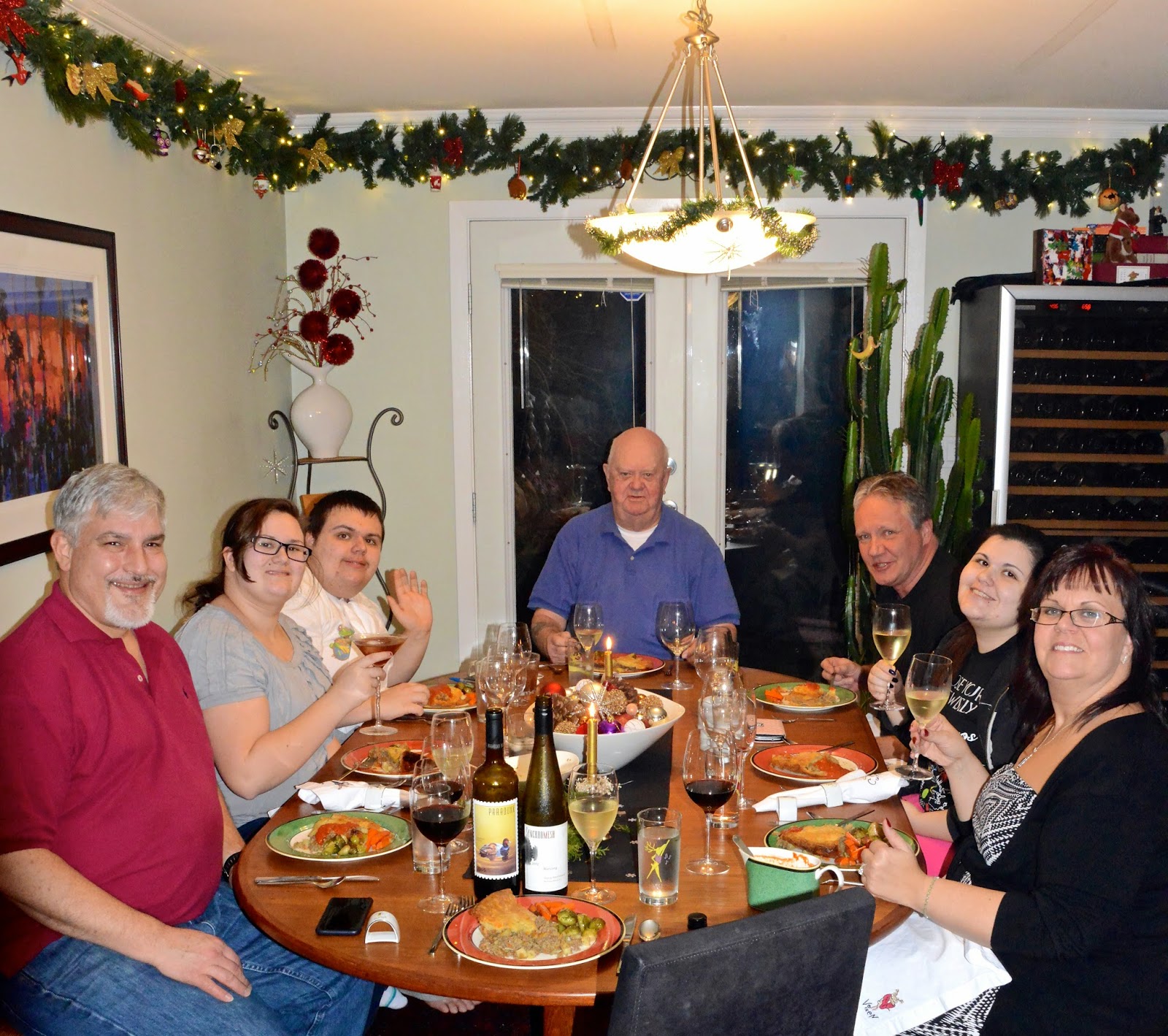
Feeling sorry about the fact that Boo had to miss last night's Christmas dinner because he was working, I invited Dad, Vixen, Big Trucker and the kids to come over to our place for a Boxing Day dinner the next night. The dinner was going to be much lower key but I did decide to pop the corks on some pretty special wines.

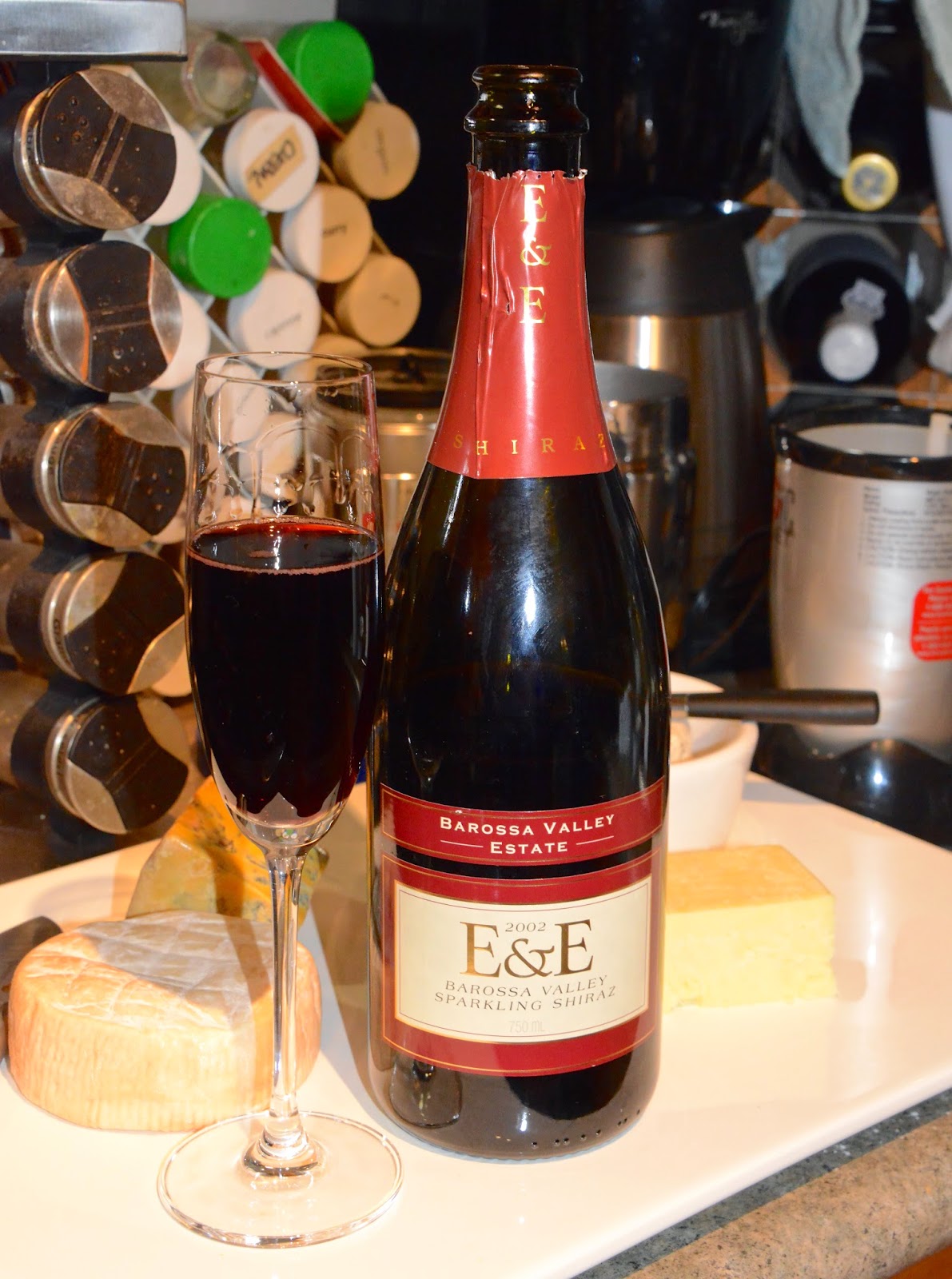
1836.  2002 Barossa Valley Estate E&E Sparkling Shiraz (Barossa Valley) 

One of the more perplexing questions I've run across while drinking all these bottles of wine is why a bottle of E&E Sparkling Shiraz costs two-thirds the price of a regular bottle of E&E Black Pepper Shiraz. The same premium wine is used and the process of making sparkling wine is way more intensive and costly, but the still wine is the costlier of the two. Go figure. I suppose the idea of Sparkling Shiraz is still mostly a novelty sip outside of Oz.

The end result is that our's is not to question why, our's is just to take advantage of the bargain pricing - "bargain," of course being a relative term when we're still talking $65 bottle - when you can even find it. I haven't seen the sparkling Black Pepper on local shelves for years now. Too bad since this is our last bottle.

This bubbly red isn't likely going to be the first choice of a traditional Champagne lover. Even though the wine is made in the traditional Méthode Champenoise, there's not a lot of mousse filling your mouth and any expected biscuit-y notes are subdued by the bold, dark fruit that's still evident on the palate but I thought it was an interesting start to the evening and was big enough to carry us through until the hockey game ended and Dad was willing to sit down to dinner.

I don't make tourtière very often - indeed, it seems to have become a bit of a rarified, seasonal treat for every second or third Christmas. Tonight's pie - aided by yet another perfect crust from Boo the CrustKing - proved to be a popular treat, even for the picky eaters that the nieces and nephew have become. It certainly didn't hurt that the homemade tomato jam really did taste darned fine with the tortière. Turns out "tomato jam" is just a fancy name for ketchup, but this was the best ketchup I'd ever had.

1837.  2012 Synchromesh Thorny Vines Vineyard Riesling (Naramata Bench - Okanagan Valley)

1838.  2005 Duckhorn Paraduxx (Napa Valley - California)

Being a mix of pork, beef and veal mince, I figured we could likely get away with both a Riesling to cut through richness of the crust and fat and a Napa blend to match up with the meat. When both wines are as good as these two were, I think I could have gotten away with serving a couple pieces of salami with a boiled potato and the wines still seen everyone leave the table happy.

I'd discovered Synchromesh and its racy Rieslings back at the 2013 Wine Bloggers Conference that was held in the Okanagan. They were part of the Okanagan Falls Wine Association gang that took a gaggle of us bloggers hiking up to a spectacular viewpoint and wine tasting. Synchromesh is only a couple of vintages into its production but they're already a label that I'd go out of my way to find. Problem is they just don't make very much. When we drove by the winery early last September, they had already sold out of their 2013 vintage.

While the Synchromesh winery and home vineyard is just outside of Okanagan Falls, this Riesling is made from purchased fruit that is grown on the Naramata Bench - half an hour or so up the road. The vineyard is planted with a single German clone (218) of Riesling and bright with citrus and apple, pear flavours. I haven't seen many Okanagan winemakers marketing the clonal background of their fruit. Maybe this is a sign of a growing sophistication among BC wine drinkers. This was only the third fruit on these vines; so, I'd be really hopeful that the wines to come will be even more complex and tasty.

Paraduxx, on the other hand, has had some time to master its wines and I think it's pretty safe to say that they've done so. The '05 vintage is a Zin dominant (60%) blend with Cab Sauv (32%), Merlot (6%) and Cab Franc (2%) filling out the glass. Although I've had the odd chance to taste Paraduxx at various events, I don't think I've ever had a full bottle before. Even when Boo and I visited Duckhorn, we visited the Anderson Valley vineyards and not Napa. So, they were serving up Duckhorn Pinot Noirs there. It may have take awhile to finally pull the cork on one of these bottles, but I'll just consider it to be a bit of Christmas present to myself.

1839.  1978 Kopke Colheita Port (Portugal)

As fond as I am of Ports and stickies, I can't say that I was familiar with the term "Colheita" when this bottle more-or-less dropped into my lap. A client of our firm was downsizing his home and he needed to divest himself of some Persian carpets. Having a spouse who is an avowed Carpet Queen, I was given the head's up and we visited the client. Boo came away with two carpets.

The downsizing also included the divestment of a good portion of the wine cellar. So, in lieu of a carpet, I picked out a mixed case of Ports. Having married a Portuguesa, our client had an extensive collection of Port wines. This is the first of our dozen to be opened.

Like the term "Colheita," the Kopke winery was equally unfamiliar to me. Founded by a German diplomat in 1638, Kopke has been declared the world's oldest Port house, having celebrated over 375 years of continuous wine production. (Compare that to Synchromesh's five years or so of production). Kopke is also a market leader in Colheita single year tawnies. After a little reading, I've come to learn that Colheita Port must be aged for a minimum of seven years in oak casks before bottling and that the extended time in wood can result in a richer, more viscous wine due to evaporation over the years. That additional ageing also leads to Colheita's distinctive tasting notes, including raisiny fruit, caramel, honey, toasted nuts and oak.

Colheitas are considered mature at 20 years and the bottles should feature two dates on them: the harvest year and the year the wine was bottled.  Our bottle's old school, hand stencilled label declares the 1978 vintage and the back label stated that the wine wasn't bottled until 2002.

Tasty stuff - and if the rest of our dozen bottles are just as fine, Boo and I are going to have some rather delightful endings to a few more special dinners. Hopefully, we won't have to wait until next year's holiday season to find reason to pull a few more corks - and an even bigger hope is that Boo will be able to actually join us on Christmas day next year.


Wednesday, December 17, 2014

A White Blend Fit a Bishop

Finally, a slow night at home. Not that I don't enjoy all the seasonal socializing. I just need a little time for recharging now and then. A simple night of lounging in front of the TV with a new bottle from an old friend to try is just what I needed.

I say a "new bottle" because we haven't had a bottle of this white blend but, if memory serves, I picked up this il Vescovo at the Vancouver International Wine Festival earlier this year. I don't think it can normally be found in our market. I say "old friend" because the wine hails from a favourite producer in the McLaren Vale region outside Adelaide: Chapel Hill. In checking back on the blog, I'm surprised I haven't already added more bottles from Chapel Hill to The List. I suppose that must mean that we have a good number in our cellar just waiting to be opened. However, rather than go into a lot of detail on the winery, maybe I'll just refer you to my post from when we stayed at the Chapel Hill guest house a couple of years back.

1826.  2011 Chapel Hill - il Vescovo White (McLaren Vale - Australia)

The name for the wine comes from the fact that the winery is built around that historical chapel. The winery has taken to marketing some of its wines with a nod to that past and "il Vescovo" is Italian for "the bishop." The wine, itself, isn't Italian in nature but it does harken to Mediterranean roots. Chapel Hill offers both a red and a white il Vescovo and the white is a blend of Savagnin, Verdelho and Roussanne - grapes that hail respectively from Jura (France), Portugal and the Rhône.

A rather novel blend at that. It's not one that you'd likely run across and it's made all the more interesting in that, up until a couple of years prior to this vintage, most Aussie growers thought their Savagnin was actually Albariño. It appears that, rather than rip out all the faux-Albariño and starting again, a number of wineries are now serving up Savagnin, Chapel Hill included.

Knowing that Savagnin is hardly a grape variety that I sip on a regular basis, I immediately checked my Wine Century Club tally but there it was at #121. I knew I'd run across it before - while in the Barossa Valley as luck would have it, just days before we visited Chapel Hill - but I wasn't sure that I'd added it to my tally as we were only trying it as part of tasting at the time.

Much like how I tend to view Spanish and Italian whites, however, Australia is not generally my first choice for white wines. I'm a long-time Aussiephile when it comes to red but, as a rule, I'll reach for a BC white before I'll open an Aussie white (Margaret River wines being a big exception but there aren't many of those wines in our market). This was intriguing though - not so much in a fruit on the palate kind of way but because it still showed some decent acidity while offering bigger weight than we'd normally see on a BC blend.

It certainly has me looking forward to a return to Chapel Hill and to seeing what whites show up at the 2015 Wine Festival because Australia is the featured region and that might bring out some other surprises like this one. Now, that's a bit of socializing that I'm going to need to rest up for.

Saturday, September 20, 2014

Gaaaaarrrrnacha Day?

Just as I didn't know we were drinking #1700 awhile back, I had no idea (at the time) that I was hitting the seven-eighths mark of this Odyssey when I pulled the cork on this bottle.

Had I known, it might have merited a bit of fanfare.

Oh well, good thing it was International Grenache Day and I'd decided to open a one-of-a-kind bottle (at least for me) that I'd had in the cellar for a bit. Not only that, it was also International Talk Like a Pirate Day - one of my favourite days of the year. So, I rather combined the two into International G'arrrrrrrrnacha Day. What, with Garnacha being the Spanish name for Grenache, it was the perfect way to incorporate "arrrrrrrrrgh" into the evening's wine.

1750.  2005 The Colonial Estate - Alexander Laing Single Vineyard Old Vine Grenache (Barossa Valley - Australia)

Lucky for us, this turned out to be a hidden treasure from the cellar. I couldn't recall where or when I'd picked up the bottle because The Colonial Estate is not a winery that I've seen in our market. It was always possible that the winery had made a one-off appearance at the Vancouver International Wine Festival, but I found a note that this was a wine that Boo and I had picked up a couple of years back when we were visiting his Mom and brother in North Carolina. Considering we can only bring two bottles each back over the border with us (WTF? I know), there must have been something in the wine shop that caught my eye about this one. I see that it did get big points (94) from Parker but I'm not normally a point chaser.

In any event, whatever caught my eye worked because we were greeted by a lovely, boisterous nose that was matched by all sorts of dark, complex fruit on the palate. There was enough going for this wine that it could tempt a pirate to give up his rum.

The Colonial Estate website doesn't give a whole lot of information about the background or heritage of the winery, but the descriptive page for the Alexander Laing Grenache did say that it "owes its existence to the blocks of weather beaten bush vines that survived the vine pull out at the end of the last century." Weather beaten bush vines, sounds rather appropriate for a pirate.

Maybe next year, if the two "international days" co-incide again, I'll look to promote it as International Drink Like a Pirate Day. That could be telling.

In the meantime, with only 250 bottles to go (okay, 251), I may have completed my Odyssey by this time next year AND I may have given up drinking altogether. Then again, it's just as likely that I could be made to walk the plank off the coast of Somalia before then. I certainly hope to still be drinking after I've "concluded" the blog's task. Just let me run into a little more Colonial Estate. Please.

Sunday, August 31, 2014

St. Henri Shiraz & Ascending the Iron Throne


It's been many, many years since Boo and I have made our way to the Pacific National Exhibition - Vancouver's throw back back to an old state fair, if you will. But, this year, the PNE brought the Game of Thrones Exhibit to town - and there was no chance that we wouldn't be making our way to take in that baby.

For those that remember, this was like a throw-back to the old Expo86 (and even to a few comparable aspects of the 2010 Olympics) where folks lined up or grabbed tickets hours in advance. There was no Tyrion Lannister Beer & Wine Garden (which isn't that bad of an idea if you ask me) but we did virtually ride to the top of the Ice Wall at Castle Black, see all sorts of costumes and props and take a quick sit in the Iron Throne.

The weather at the fair wasn't the greatest for our day; so, we didn't stroll the fairways for too long outside of our time at the GOT show but, of course, we did get our share of mini-donuts and we took in the BBQ cook-off. As the latter was hardly a BYO event, we grabbed a doggie bag (or in our case, a "big biggie-bag") and made our way home to finish off the Q with a big red worthy of tossing back while ruling from the Iron Throne.

1728.  2005 Penfold's St. Henri Shiraz (South Australia)

Of course, a true king may have quaffed back a bottle of Penfold's Grange but our tenure on the throne was rather short-lived. Accordingly, as mere vassals, we contented ourselves with the St. Henri Shiraz - a mighty fine drop on its own, if you don't mind. A multi-district blend, this Shiraz combines fruit from seven South Australian districts (Barossa, Eden, Clare, McLaren Vale, Langhorne Creek, Robe and Bordertown) and is fleshed out further with a bit of Cab Sauv from Coonawarra and Barossa.

According to the winery website, the wine is a bit of a counterpoint to Grange in that it doesn't see any new oak, leaving  it somewhat richer and fruitier - although the website also refers to 2005 as being a "dark horse vintage."

Well, if nothing else, Games of Thrones relies on the dark horse to come through - if only because so many of the lead characters get killed. I have no doubt that the St. Henri's would be a welcome addition to any wedding - red or otherwise.

Sunday, August 3, 2014

Spinifex and Fireworks

Photo from huffingtonpost.ca 

Normally, that fireworks photo would have been one of our own and I wouldn't have lifted if from Huffington Post, but as you'll see with the post, my bloglife is a little out of skew nowadays - and desperate times call for desperate measures.

I'm what we'll call "hazardously behind" in my postings. I haven't lost count of the wines we've polished off, we just seem to drink them faster than I'm able to blog about them. So, I'm going to do a little jumping over some wines - while hitting a few memorable wines - with the idea of staying more current AND then catching up with the earlier posts as time permits.

As the day we pull the cork on my 2001st bottle starts seeming a whole lot closer at hand, I'm hoping to keep better tabs on the number of the bottles as we open them. I really had no idea that Boo and I were enjoying a landmark bottle #1700 as we were sipping away.  We might have made more of an event for it had I known.

Luckily, it turned out to be a memorable bottle and a fun evening in any event - although Boo opted to call it a night after the wine.

1700.  2004 Spinifex Esprit (Barossa Valley - Australia)

Spinifex is a relatively new winery to set up shop in the Barossa. It's owners, Peter Schell and Magali Gely, started the winey in 2001. In doing so, however, they decided to pay respect to Magali's French roots. Their website notes that Magali's parents were vignerons in the south-west of France and that Peter has worked six vintages throughout France over the last decade. The pair work primarily with Rhône grapes that have traditionally been successful in both the Mediterranean and in Australia.

Spinifex chooses to make wines that are predominantly blends and Esprit fits right into that scheme. With 36% Grenache, 34% Shiraz, 20% Mataro (Mourvèdre), they've constructed that Barossan take on the Rhône blend - the well known GSM - but they've ramped up the Rhône by adding a 10% touch of Cinsault.

Although it might take me awhile to actually get around to writing the post, Boo and I had a thoroughly enjoyable Châteauneuf-du-Pape last night and, while this Esprit is primarily the same take on grapes involved, it had bigger fruit but was equally tasty.

I figure we're lucky that Marquis Wines has carried a few Spinifex wines over the years because they don't make an awful lot of wine. A Robert Parker reference on this vintage of Esprit said that only 330 cases were made. I don't even think the winery is big enough to have its own cellar door. When Boo and I were in Barossa a couple of years back, we didn't see the winery itself but we did taste a couple of their wines at the Artisans of the Barossa - a cooperative tasting room for a group of "small batch, sub-regional" winemakers. I'm more than happy to grab a bottle or two by whichever method we can run across them.

So, I figure opening #1700 is worthy of the fireworks display at the top of the post on its own; however, the evening was the third night of this year's Celebration of Light fireworks display. Boo decided against fighting the crowds downtown to watch Japan's entry but I ventured down to Mr. D's.

I figure the photo above would have approximated what we'd have seen from his apartment. After all, it is of the evening's show. However, we didn't even stick around to watch the fireworks. Since it was the Saturday night of Vancouver's Pride weekend, Mr. D. proposed a visit to one of the local watering holes and he figured we wouldn't be able to take in both the fireworks and the bar as the line-up to get into Pumpjack would have been down the block by the time the last firework rocket had been launched. We decided to see if we could enjoy some fireworks of an even more intimate nature and just head straight off to the pub. Running into Will and Harry and a few other boys was a great start.

Unfortunately, from the blog's point of view, there wasn't another bottle of wine to be had. Funny, but I hardly think that a leather bar is going to be the best place to find a bottle of wine. But we did see a firework or two - particularly Mr. D. I think I might just leave that photo to your imagination though. No need to post it and detract from the wine at hand.

So, with 1700 bottles down, I've got my work laid out for me to try and get all my posts in order by the time number 2001 rolls around. Best get to it.

Tuesday, July 15, 2014

A Sip with A View


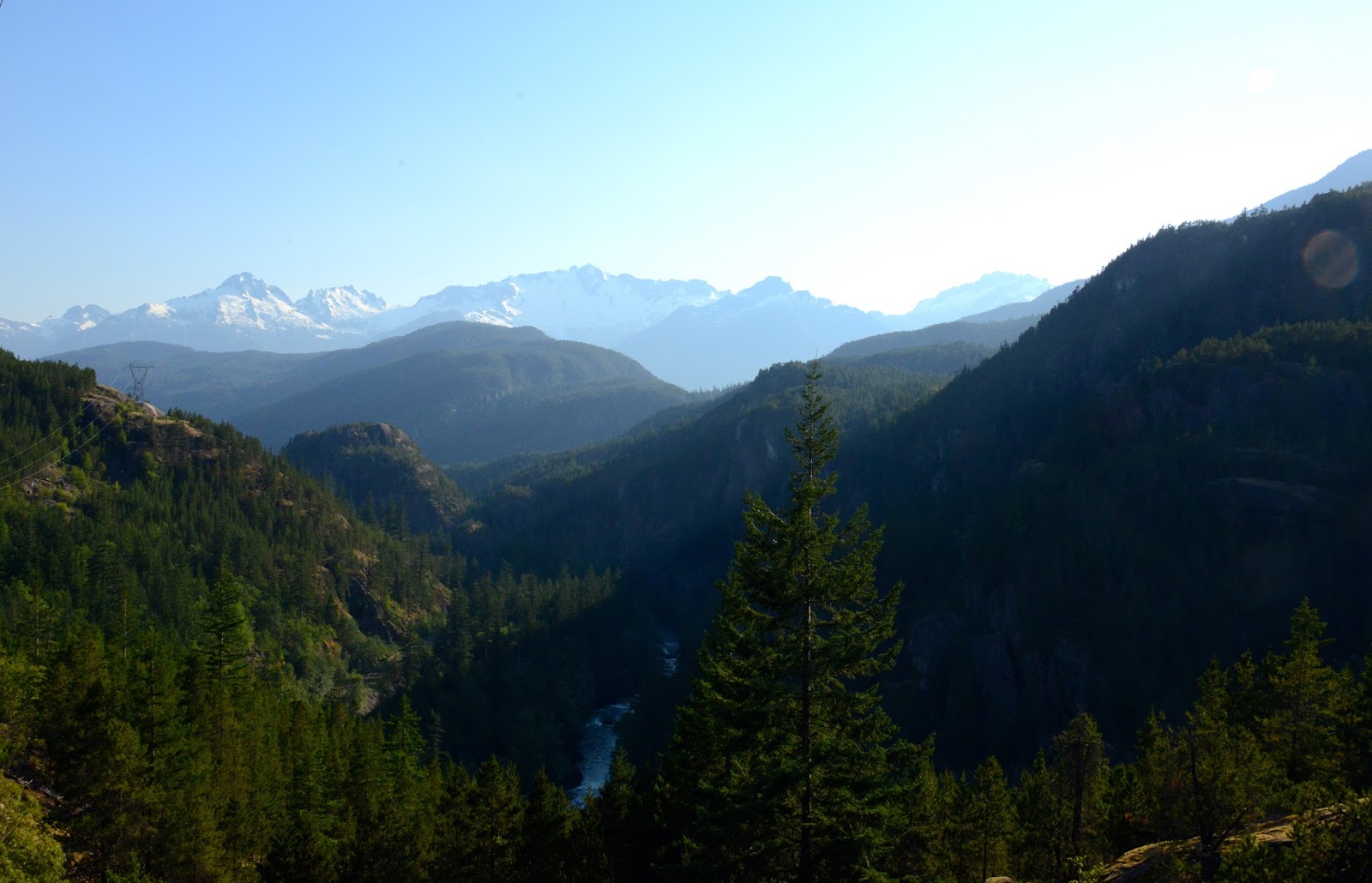
Merlot Boy and Margarita's Vanhattan (to quote Vancouver's social arbiter-at-large, Fred Lee)/Manhattan excursion is quickly coming to an end. We thought it'd be a great outing to take them up to the newly-opened Sea-to-Sky Gondola up the highway in Squamish. Merlot Boy, Boo and I had spent a jaunty weekend in Whistler a dozen years ago or so but this was Margarita's first visit to Vancouver and she'd never taken in the destination that plays second home to so many of her countrymen and countrywomen.


Boo and I had hiked the Squamish Chief in what must have been another lifetime but our Aussie buds wouldn't have enough time to even attempt the climb. So, the new gondola presented a perfect opportunity for them to take in the views and see a snippet of BC nature.

N.V. Cantine Sacchetto Vino Frizzante (Prosecco DOC - Italy)

Of course, with this crew, no adventure is truly an adventure unless there's a sip or two involved. Knowing this as a given fact, I'd packed along a bottle of Prosecco and a set of Govino glasses. Luckily, there wasn't too much chance of drinking and hiking beyond acceptable limits. It truly could have been a bit of fall.

While I remembered the wine, I didn't check to see if the Frizzante had already been added to The List. The Sacchetto appears to already be there; so, since this is non-vintage production, there's no new number to help us reach 2001.


Following the gondola jaunt, we carried on up the Sea-to-Sky and gave Margarita a quick tour of Whistler. That and, naturally, a cocktail at the Chateau Whistler's Mallard Lounge.  

We decided to make a pit-stop on the way home to quickly take in Shannon Falls as well. Since there were no additional cocktails or bottles of wine to be had, interest quickly waned and we were all loaded back in the car for the ride home - where there was definitely another bottle ready to be poured.

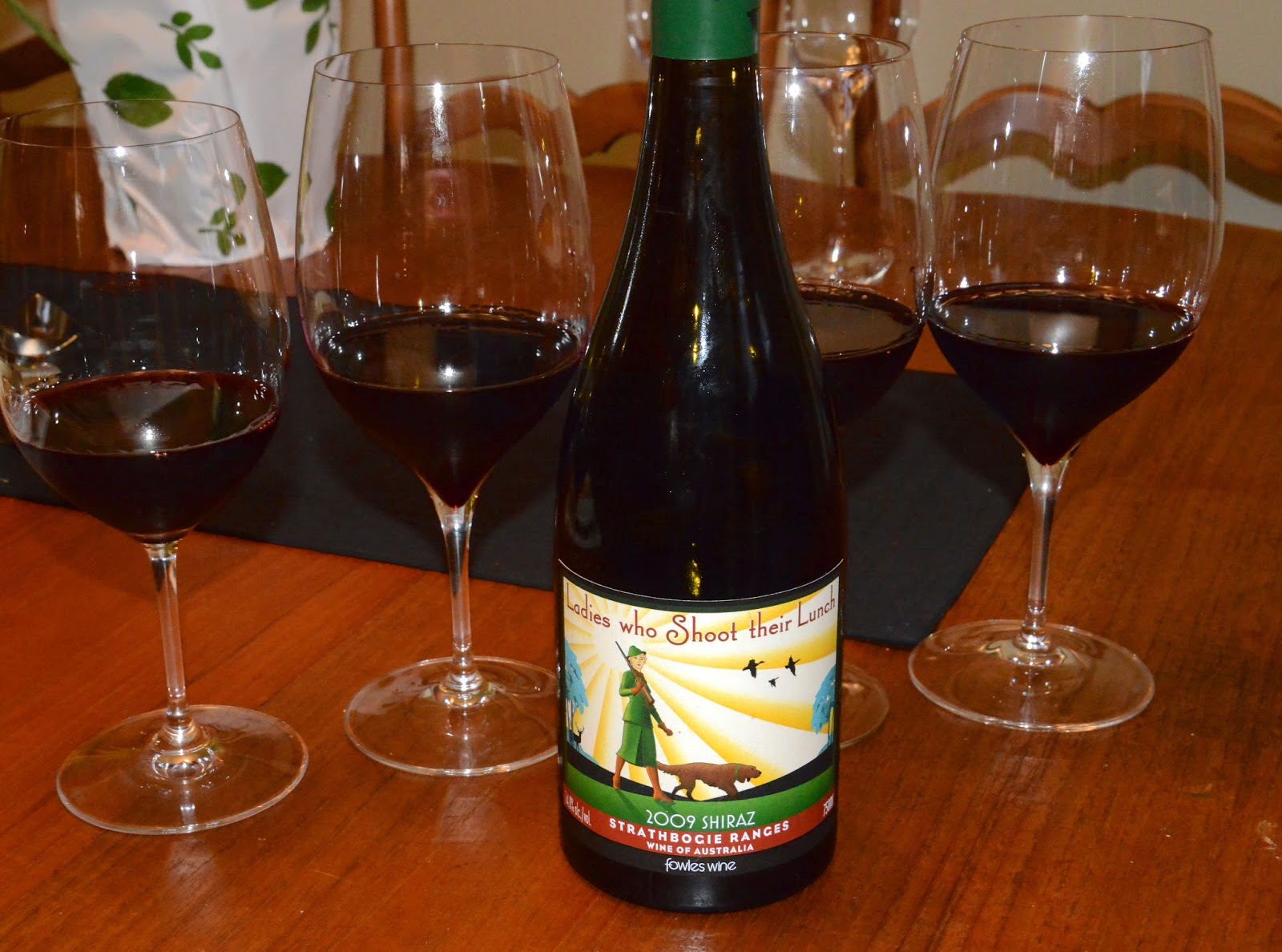
1688.  2009 Fowles Wine - Ladies Who Shoot Their Lunch Shiraz (Strathbogie Ranges - Victoria - Australia)

While both Merlot Boy and Margarita joined Boo and I for a bit of a road trip and wine tasting in the Margaret River district south of Perth in Western Australia, we haven't done any wine tours with them in their home state of Victoria. (There had been a one-day tasting with Damien in the Yarra Valley back in '02 but that doesn't count because Margarita was an unknown quantity to Boo and I back then.)

Of course, Victorian producers are legion; so, neither of our Aussie guests had even heard of the Ladies Who Shoot Their Lunch. I'd run across them a few years back at an Aussie wine tasting and, every one in awhile, the winery re-visits Vancouver. I picked this bottle up at one of the Vancouver International Wine Festivals and thought we should toast their neighbourhood producers. Strathbogie is a bit of hike from both Melbourne and Ballarat - where our buds reside - but there's always a chance we could take a tour and a little wine tasting the next time Boo and I make it down under.

I won't even make them take me on a hike first.